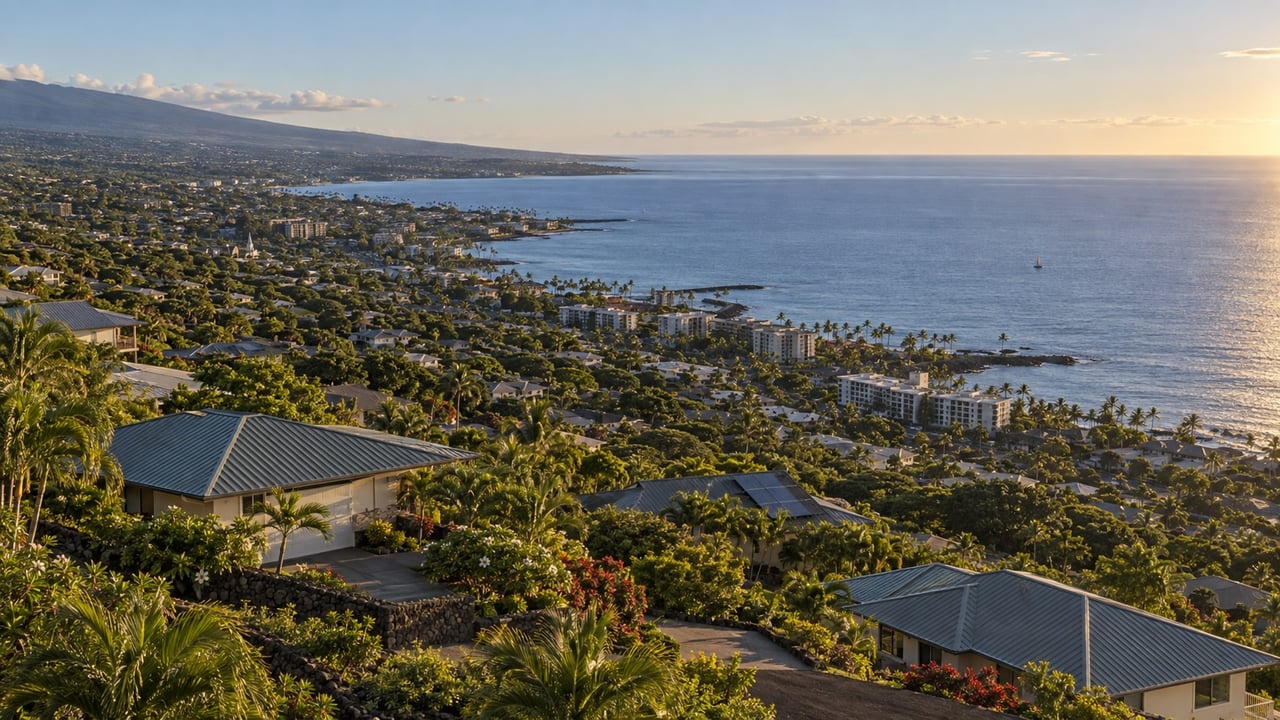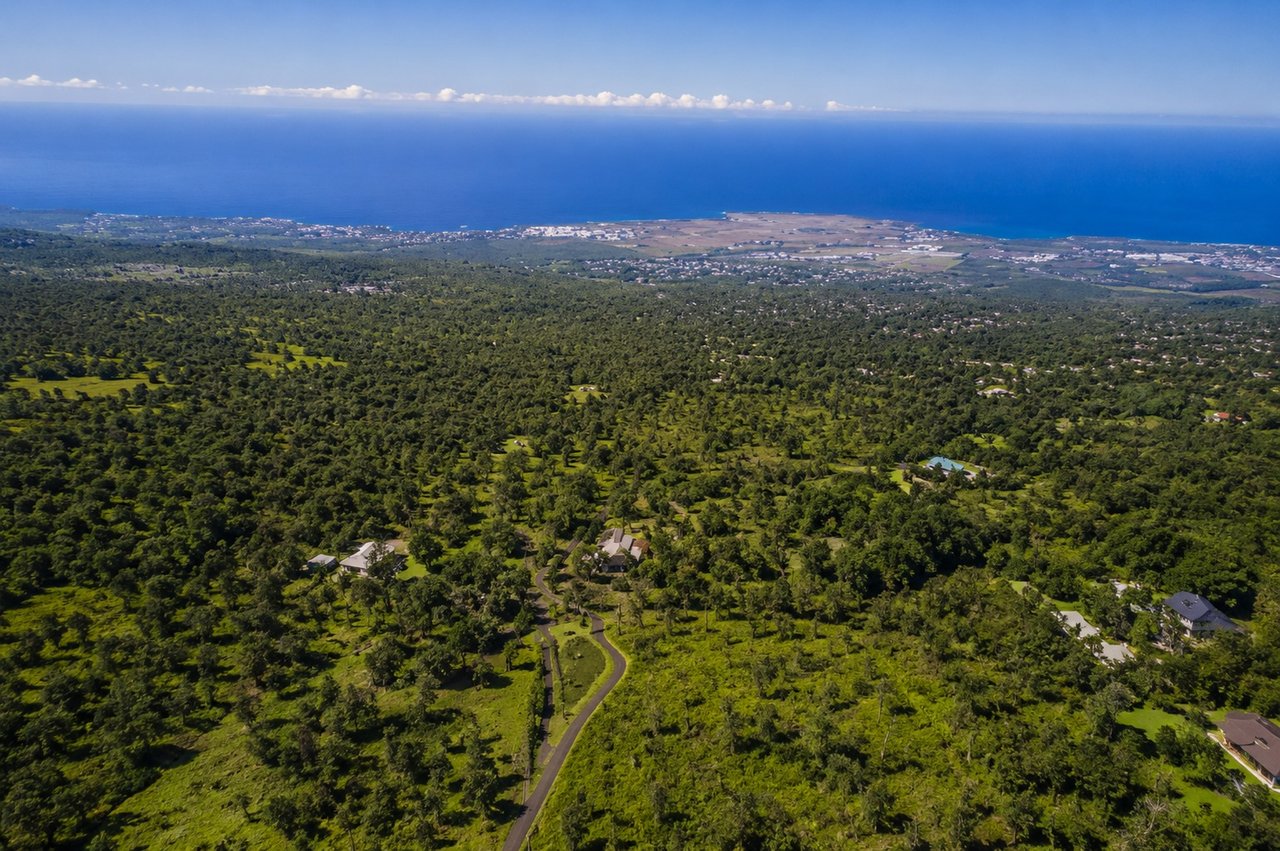
Kaloko is the area north of Kailua-Kona town, just above the Costco and Home Depot corridor along Queen Kaahumanu Highway, where the terrain rises toward the lower Palisades. Acreage parcels here attract buyers who want space, some elevation, and proximity to town services without being far enough out to feel remote. The price point can look reasonable compared to coastal Kona. The due diligence is not simple.
After 35 years of real estate transactions in West Hawaii, I can tell you that acreage buyers who get surprised after closing are almost always the ones who focused on the view and the square footage and skipped the records. With larger parcels in North Kona, the most important information about the property is almost never in the listing description. It is in the TMK file, the zoning records, the county wastewater database, and the Department of Water Supply's current service map. Here is what to check.
Key Takeaways
- Every acreage parcel in Kaloko needs to be evaluated on its own records, not on the general neighborhood. Two lots a quarter mile apart can have different zoning designations, different water service status, and different wastewater system requirements.
- Your Tax Map Key (TMK) number is the starting point for all parcel-specific research: zoning, subdivision conditions, flood zone status, wastewater records, and water service history all tie to the TMK.
- Water availability in North Kona is actively managed by the Hawaii County Department of Water Supply. Do not assume a parcel has water service because nearby properties do. Confirm meter status and service availability for the specific lot before you make an offer.
- Many Kaloko parcels use cesspools rather than septic systems. Hawaii has ongoing cesspool elimination requirements that can create upgrade obligations at sale or when pulling permits. Know what is on the ground before you close.
- Access to acreage parcels is often via private road or recorded easement. Confirm that the easement is properly recorded, understand who maintains the road, and verify that the access is practical for construction and everyday use.
- Agricultural zoning is common in this area and comes with permitted use rules, setback requirements, and sometimes agricultural dedication restrictions that limit what you can build and how you can subdivide later.
Start with the TMK
The Tax Map Key is Hawaii's parcel identification system. Every property on the island has one, and it is the single most important starting point for acreage due diligence. With the TMK, you can pull zoning records, subdivision map conditions, flood zone designations, wastewater system history, and water service records all tied to that specific parcel rather than to the general area.
Get the TMK from the listing agent before you do anything else. Then go to Hawaii County's Real Property Tax system and pull the property record. Look at the zoning designation, the land classification, the lot dimensions, and any subdivision conditions attached to the parcel. If there is a recorded subdivision map, pull that too. Subdivision maps can contain conditions on access, utilities, or permitted uses that are not in the MLS listing and that a title search alone may not surface until late in escrow.
Hawaii's land-use system has two layers that matter for acreage buyers. The state land-use classification establishes broad categories: urban, rural, agricultural, and conservation. The county zoning adds a second layer with specific rules on setbacks, height limits, permitted uses, and building coverage ratios. Both matter, and they are not always aligned in ways that are intuitive. A parcel zoned agricultural at the county level may still have state land-use constraints that limit what you can do on it. Confirm both before you form a plan for the property.
Zoning and What You Can Actually Do
Agricultural zoning in North Kona covers a significant portion of the acreage inventory in and around Kaloko. It does not mean you cannot build a home. Under Hawaii County's Agricultural zoning, residential use is generally permitted as an accessory to the agricultural use of the land. What it means is that the land is expected to be used for agricultural purposes as the primary use, with the residence being secondary.
In practice, this matters for a few reasons. First, permitted structures, setbacks, and lot coverage ratios differ from residential zoning. Second, some agricultural parcels carry dedicated agricultural use agreements that restrict how the land can be developed or subdivided. Third, if you want to build accessory structures, add agricultural outbuildings, or eventually CPR the property into separately titled units, the rules for agricultural land are different from residential land. Confirm the specific zoning designation and any recorded use restrictions with Hawaii County's Planning Department before you finalize your plans for the property.
If the parcel is part of a recorded subdivision, pull the subdivision map from the Bureau of Conveyances and read the conditions. Subdivision conditions can restrict further division, require specific access configurations, or impose obligations on lot owners that are not disclosed in a standard listing. They run with the land, meaning they bind future owners as well as the current seller.
Water: Confirm Before You Assume
Water service in North Kona is more complicated than in the developed coastal corridor. The Hawaii County Department of Water Supply has issued service notices for the Kaloko and Kaloko Mauka areas in recent years, and water availability in specific parts of North Kona has been actively managed. Do not assume a parcel has water service because the neighborhood generally does.
What to confirm for any specific acreage parcel: whether there is an active water meter on the property, whether the Department of Water Supply has committed water service for the parcel's intended use, and whether any pending development plans will require a water availability or commitment review. The DWS website allows parcel-specific service lookups using the TMK. Use it.
If the parcel does not have county water service, confirm what the alternative is. Some North Kona acreage parcels use private wells. Others are set up for catchment. Both require additional due diligence: well yield and water quality testing for wells, storage capacity and system condition for catchment. If you are planning to build on a parcel without existing water service, factor in the cost and timeline of establishing service or an alternative system before you establish your budget for the project.
Wastewater: Know What Is in the Ground
This is the due diligence item that surprises acreage buyers most often. If a property does not have a sewer connection, it has an onsite wastewater system. In Kaloko and much of North Kona, that means a cesspool, a septic tank, or in some cases an aerobic treatment unit. Cesspools are particularly common on older rural and agricultural parcels.
Hawaii has ongoing cesspool elimination requirements. The state has set deadlines for phasing out cesspools under Act 125, with priorities based on proximity to shorelines, streams, and drinking water sources. The specific timeline for any given cesspool depends on its location and classification. What this means for a buyer: a cesspool on the property you are purchasing may carry a future upgrade obligation that becomes your responsibility after closing. That obligation can be triggered by a sale, by pulling a building permit, or by a state-mandated deadline depending on the cesspool's classification.
Before you close on any acreage parcel with an onsite wastewater system, confirm through the Hawaii Department of Health's Wastewater Branch what type of system is in place, when it was last inspected, whether it is a designated cesspool subject to Act 125 requirements, and what the estimated cost of any required upgrade would be. This is not a contingency that buyers commonly waive in this market, and it should not be.
Access: Legal Right Is Not the Same as Practical Access
Many acreage parcels in Kaloko and the broader North Kona area are not directly fronting a public county road. Access is via a private road, a shared driveway, or a recorded easement across an adjacent property. The legal right to use that access is documented in a recorded easement. The practical reality of whether it works for your needs is a separate question.
What to verify: whether the access easement is properly recorded with the Bureau of Conveyances, who holds maintenance responsibility for the road and any culverts or drainage structures associated with it, whether the access route is wide enough and graded appropriately for construction vehicles if you plan to build, and whether the easement specifically grants the type of access you need, since some easements are limited in scope.
Private road maintenance is a real ongoing cost and a real source of neighbor disputes. If access is shared with other parcel owners, understand how maintenance decisions are made and how costs are allocated. If there is no recorded maintenance agreement, that is a gap worth addressing before closing rather than after. Hawaii County has a private road maintenance application process for nondedicated roads, and understanding where the road stands in that system is part of competent acreage due diligence.
Ongoing Maintenance: What Acreage Actually Costs
Larger lots in North Kona come with ongoing maintenance that buyers underestimate more often than not. Drainage, vegetation management, driveway upkeep, grading, and erosion control are not one-time expenses. They are recurring costs that vary by the specific terrain, the amount of annual rainfall at the property's elevation, and how intensively the land is used.
Kaloko's lower elevation stays relatively dry compared to the Palisades above it. But even at lower elevations, larger lots accumulate drainage challenges over time, and invasive vegetation management is a genuine ongoing responsibility. For parcels with steeper terrain, retaining walls, drainage swales, and access road maintenance can be significant annual expenses. Get a realistic picture of what the property's maintenance history has been before you close.
For buyers planning to build on a vacant parcel, factor in site work separately from vertical construction. In North Kona, terrain preparation, grading, driveway construction, utility hookups, and septic or wastewater system installation can add significantly to the total project cost. Shipping costs for materials remain elevated following Matson and Young Brothers rate increases in late 2025. Budget 10 to 15% above mainland estimates for any materials-intensive site work.
Frequently Asked Questions
Where is Kaloko and what makes it different from the broader Kona Palisades?
Kaloko is the North Kona area just above the commercial corridor near Costco and Home Depot, north of downtown Kailua-Kona. It sits at a lower elevation than the Palisades neighborhoods further up the slope. Kaloko tends to have larger parcels with more agricultural zoning and a more rural character than the mid-Palisades subdivisions like Kona Palisades Estates. Properties here often have more land per dollar but also more utility complexity: more private road access, more cesspool and septic systems, and more variable water service.
What is a TMK and how do I use it for due diligence?
TMK stands for Tax Map Key. It is Hawaii's parcel identification system, similar to a parcel identification number on the mainland. Every property in Hawaii has one. With the TMK, you can look up zoning records, subdivision map conditions, flood zone status, and wastewater system history through Hawaii County's online tools. The TMK is the starting point for all parcel-specific research on any acreage purchase. Get it from the listing agent before you spend time evaluating a property.
What does agricultural zoning mean for a buyer who wants to build a home?
Agricultural zoning in Hawaii County generally permits a residence as an accessory to the agricultural use of the land. You can typically build a home on an agricultural parcel, but the residence is technically secondary to the agricultural use. This affects permitted setbacks, lot coverage ratios, and what additional structures you can build. Some agricultural parcels also carry recorded agricultural dedication restrictions that limit development or subdivision. Confirm the specific zoning rules and any recorded use conditions with Hawaii County Planning before you finalize your plans for the property.
What are the cesspool upgrade requirements in Hawaii?
Hawaii's Act 125 established a phased timeline for eliminating cesspools statewide, with priorities based on proximity to shorelines, streams, and drinking water sources. If a property you are purchasing has a cesspool, the upgrade obligation may transfer to you as the new owner and can be triggered by the sale, by pulling a building permit, or by a state-mandated deadline. Before closing on any property with a cesspool, confirm with the Hawaii Department of Health's Wastewater Branch what the specific obligation is for that cesspool, when it applies, and what the estimated upgrade cost looks like.
How do I confirm water service for a specific Kaloko parcel?
Use the Hawaii County Department of Water Supply's online tools with the property's TMK to look up meter status and service history for that specific parcel. Do not rely on what neighboring properties have. Water availability in North Kona has been actively managed by DWS, and service status can vary significantly between nearby parcels. If the parcel does not have an active meter, confirm what establishing service would require and what the timeline and cost look like before you set a budget for the property.
What should I check about access to an acreage parcel?
Confirm that any access easement is properly recorded with the Bureau of Conveyances. Review the easement terms to confirm the type of access granted and any limitations. Understand who holds maintenance responsibility for the road and any culverts or drainage structures. Verify that the access route is physically adequate for your intended use, including construction vehicles if you plan to build. If access is shared with other parcel owners, confirm whether there is a recorded maintenance agreement and how costs are allocated.
Acreage due diligence in North Kona is genuinely site-specific, and the details that matter most are rarely in the listing. If you are evaluating a Kaloko parcel and want help working through the TMK records, zoning layers, water service status, and wastewater situation, reach out to us at Kona Homes for Sale or call 808-854-5432. For more on how elevation affects property character and cost in the broader North Kona area, see our posts on how elevation affects home prices in North Kona and HOA fees in Kona Palisades communities.
Mark Davis, Esq. is a licensed real estate broker (RB-23769) with Kona Homes for Sale at Coldwell Banker Island Properties, Kailua-Kona, Hawaii. He practiced as a transactional and litigation real estate attorney for 35 years before moving to the Big Island full time. He currently serves as a member of the Hawaii County Real Property Tax Board of Appeal.
Brenda Kuessner holds the ABR, CRS, e-PRO, GRI, and GREEN designations and has sold real estate on the Big Island for 35 years. Together they serve buyers and sellers across the Kona and Kohala Coast market. This post is for general informational purposes only and does not constitute legal or tax advice.