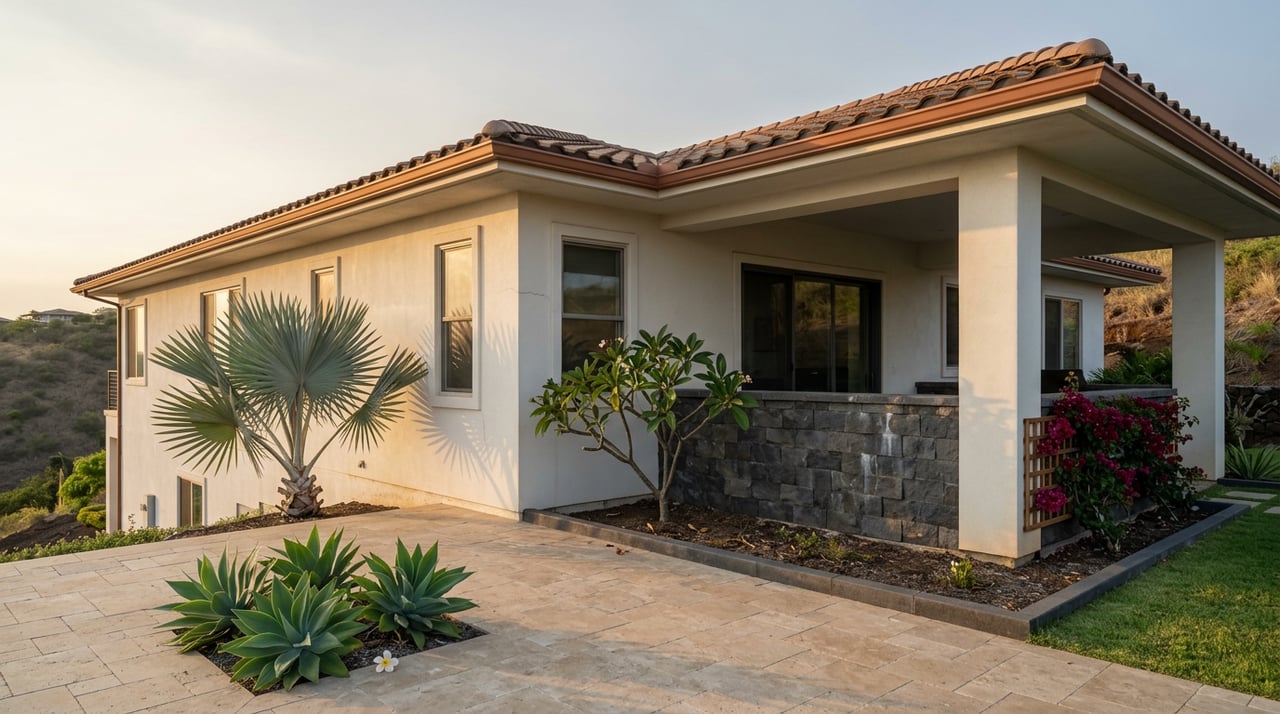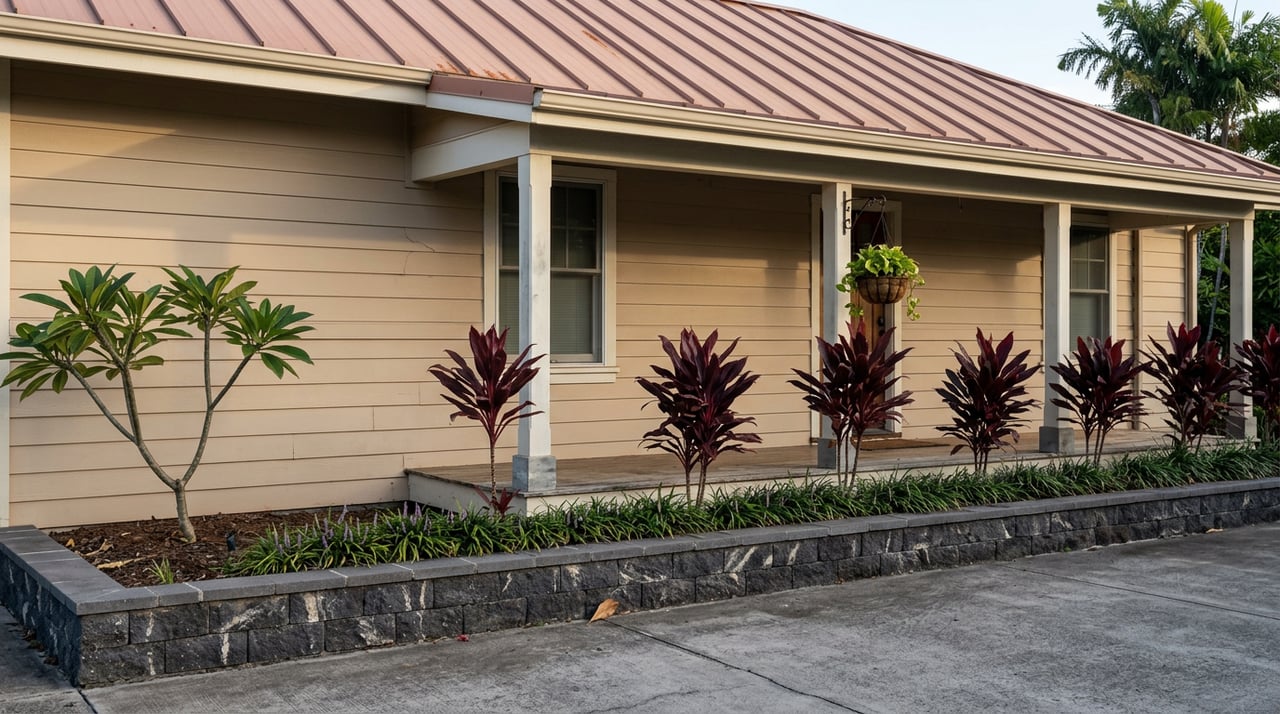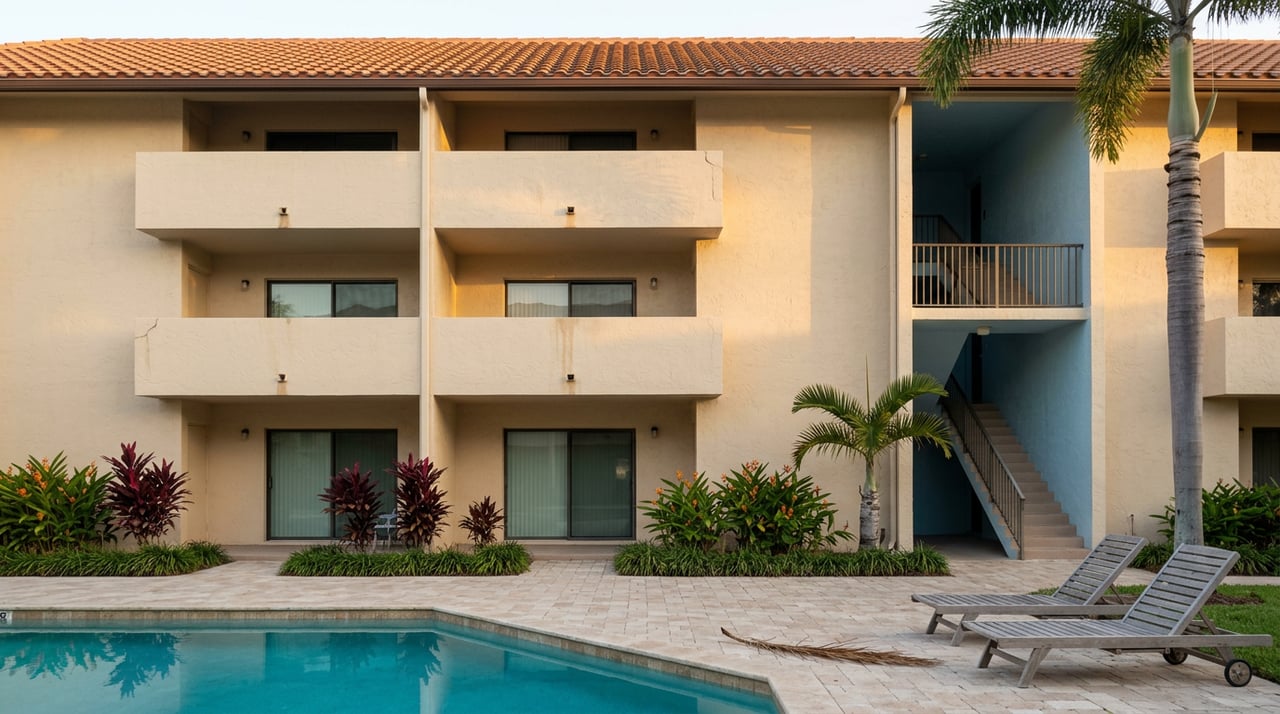
Most people shopping Keauhou condos compare the same three numbers: price per square foot, the monthly HOA fee, and how many steps stand between the lanai and Keauhou Bay. Those numbers tell you what a unit costs to own. They tell you almost nothing about whether a bank will lend on it.
The number that actually decides whether your loan clears underwriting sits several pages into the association's insurance binder, in a section most buyers never think to ask for: the percentage of the building's total replacement cost that the master policy actually covers. If that figure falls below 100 percent, your credit score, your down payment, and your debt-to-income ratio stop mattering. Fannie Mae and Freddie Mac won't purchase the loan, which means most conventional lenders won't originate it in the first place, and the pool of people who can buy that unit narrows to cash buyers.
This isn't a Kona-specific quirk. It's a statewide mechanism that happens to land differently depending on the size and age of the association you're looking at, and Keauhou has a wide enough mix of buildings that the answer changes from complex to complex.
Why the Premiums Moved So Fast
The spike traces back to reinsurance, which is insurance that insurance companies buy for themselves. Many of the reinsurers who backstop Hawaii's condo carriers operate out of Bermuda, the Cayman Islands, and Europe, and because they sit outside U.S. state regulation, Hawaii has no authority to cap what they charge. When their prices rose sharply, local insurers passed the increase straight to condo associations. House Speaker Scott Saiki described the result plainly: buildings "became underinsured," which set off a chain reaction touching owners, buyers, and lenders.
In 2024, reporting from Hawaii Business Magazine found that Hawaii condo associations had seen one-year master policy premium increases ranging from 300 to 600 percent, with a handful of buildings hit with increases of 900 to 1,300 percent. That same reporting estimated roughly 400 buildings statewide were carrying less than full replacement-cost coverage. This wasn't a one-year blip that resolved itself. A July 2025 breakdown of the crisis noted single-family homeowners statewide had absorbed rate hikes of 30 to 100 percent, while some condo associations were still seeing increases as steep as 300 to 1,000 percent. By January 2026, the state's own Department of Commerce and Consumer Affairs published a Condo Insurance FAQ confirming the hard market hadn't loosened, noting that authorized insurers often cover only 20 to 30 percent or less of a building's hurricane exposure, forcing associations into the pricier, unregulated surplus lines market to close the gap.
The 100 Percent Line
Here's why that gap matters more than the premium itself. Fannie Mae and Freddie Mac require a condo building to carry insurance equal to 100 percent of its insurable replacement value before they'll buy a mortgage on any unit inside it. Because primary lenders sell the large majority of their loans to those two agencies, a building that falls short doesn't just have an insurance problem. It has a financing problem that follows every unit in it, for every future buyer, until the coverage gap closes.
That's the piece a listing price never shows you. A shortfall doesn't stay the association's problem. It becomes the unit's problem, and it stays there until the building's next renewal proves the gap has been fixed.
For a seller, this can mean discovering mid-escrow that a buyer's lender has flagged the building rather than the unit. For a buyer, it can mean a mortgage pre-approval that looks solid on paper falling apart once underwriting pulls the association's insurance declarations.
Keauhou's Buildings Don't Carry the Same Exposure
Keauhou isn't one insurance risk profile. It's a collection of associations with very different scale, and scale changes how a shortfall lands on individual owners.
Country Club Villas, tied closely to the Kona Country Club setting, spans two buildings and 116 units sharing three pools and two tennis courts. A large owner base like that spreads a big insurance bill across more people, even as the building's total replacement value climbs with it. Keauhou Akahi, a 48-unit community along the golf course, and its neighbor Keauhou Punahele sit at a more moderate scale, where a reserve study and its update history carry more weight in how a shortfall would actually get funded. On the smaller end, Beach Villas at Kahalu'u, with only 26 units, and the similarly intimate Kahalu'u Bay Villas need the same size master policy as any other property near the water, but with far fewer owners to absorb a shortfall or a special assessment if one comes due. Keauhou Gardens adds another layer of complexity because the name is sometimes used interchangeably with the neighboring Kona Coast Resort timeshare phase, even though the two have different ownership structures and, potentially, different governing insurance documents entirely.
| Association type in Keauhou | Approximate scale | What it means for the insurance math |
|---|---|---|
| Larger resort complexes (Country Club Villas) | 116 units | Bigger bill, but more owners to split it |
| Golf-course mid-size communities (Keauhou Akahi) | 48 units | Reserve study currency matters more here |
| Smaller boutique associations (Beach Villas at Kahalu'u, Kahalu'u Bay Villas) | Roughly two dozen units | Same size policy, fewer owners to absorb a gap |
| Mixed or dual-phase properties (Keauhou Gardens / Kona Coast Resort) | Varies by phase | Confirm which governing documents actually apply |
None of this means smaller associations are worse bets. It means the question you ask before writing an offer needs to match the building, not a generic checklist.
What the State Is Doing, and Why It Hasn't Reached Every Building Yet
Hawaii's legislature didn't ignore the problem. Act 296, passed during the 2025 session, reactivated the Hawaii Hurricane Relief Fund with $170 million in reserves and expanded the powers of the Hawaii Property Insurance Association, allowing both to step in where the private market has pulled back, particularly for condominiums. That's meaningful help, but it's not a full fix. The DCCA's own January 2026 guidance makes clear that authorized private insurers are still limiting hurricane exposure coverage to 20 to 30 percent or less on many buildings, which means the state backstop is filling a gap rather than replacing the private market entirely.
The Big Island Adds Its Own Wrinkle
Keauhou itself sits well outside any active lava zone, but insurers who write condo policies on the Big Island generally underwrite the whole island together. Reporting from March 2026 noted that condo owners on the Big Island near active volcanic zones currently face additional underwriting restrictions that limit which carriers will even quote a policy. The practical effect for a Keauhou association is fewer competing insurers than a comparable building on Oahu would see, which keeps upward pressure on premiums even in a location with no volcanic exposure of its own.
Questions Worth Putting in Writing Before You Waive a Contingency
- Ask for the master policy's declarations page and the stated percentage of replacement cost it actually covers, not just the annual premium
- Request the last 12 to 24 months of board meeting minutes to catch any assessment that's been discussed but not yet formally adopted
- Ask directly whether the building carries any hurricane layer through the surplus lines market and what percentage of total exposure that layer represents
- Confirm the date of the most recent reserve study and whether it's been revisited since insurance costs changed
- If you're financing, ask your lender to confirm the building's project approval status before you remove your loan contingency, not after
A Few Questions Worth Settling Early
Does this only apply to condos, not single-family homes in Keauhou? Yes. The 100 percent replacement rule is specific to condo and co-op master policies purchased by an association. Single-family owners insure their own homes individually, so this exact financing mechanism doesn't apply, though individual premiums across Hawaii have climbed too, with statewide rate hikes reported in the 30 to 100 percent range as of July 2025.
If I'm paying cash, does any of this matter to me? A cash purchase can close in an underinsured building without the Fannie Mae or Freddie Mac restriction coming into play. It still matters for resale. Whoever buys from you later will run into the same financing question, shaped by whatever the building's coverage looks like at that point.
Can a seller fix this before listing? Not directly. Insurance coverage is decided at the association level, not the unit level. What a seller can do is gather the current declarations page and recent board minutes ahead of time, so the answer is ready the moment a buyer's lender asks, rather than something discovered for the first time mid-escrow.
Insurance binders and reserve studies aren't the part of buying a Keauhou condo anyone dreams about, but they're the part that decides whether your financing survives underwriting. Team Kuessner Davis has spent years walking Kona buyers and sellers through exactly this kind of paperwork, with a broker's eye for the details that can quietly stall a closing. If you're weighing a specific Keauhou building, or trying to figure out what a seller should have ready before listing, schedule a consultation and we'll go through it together.