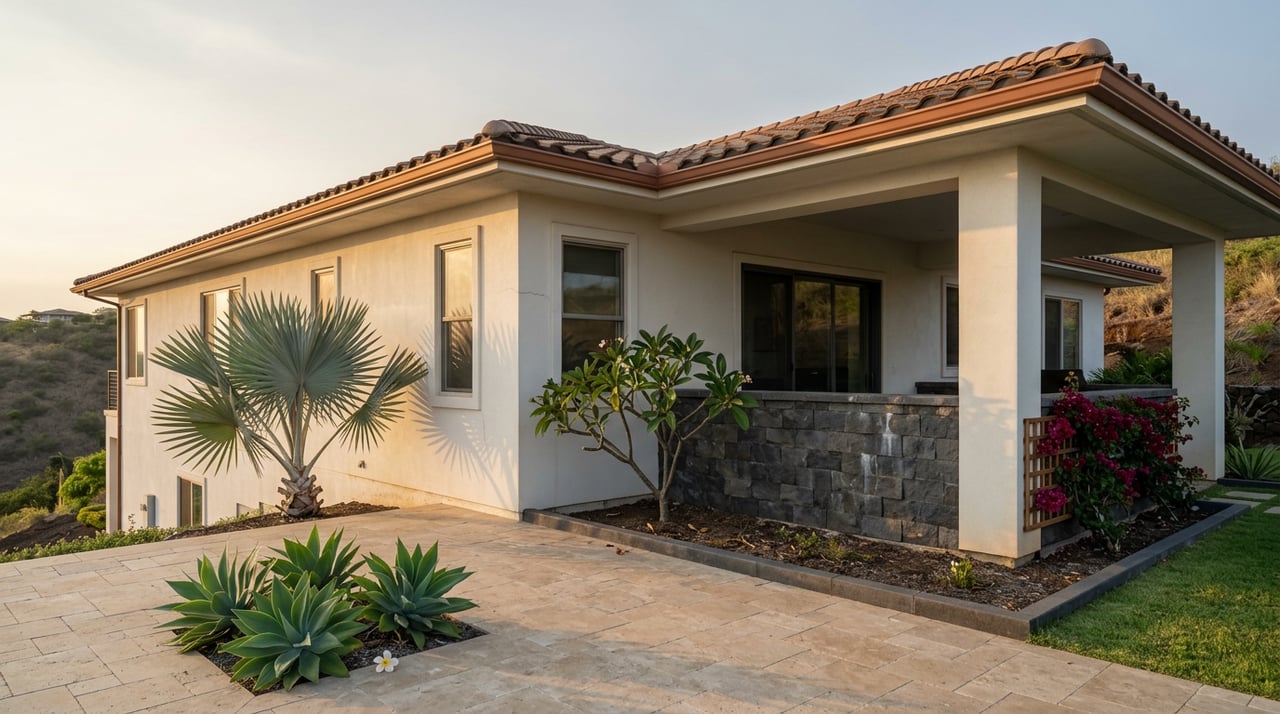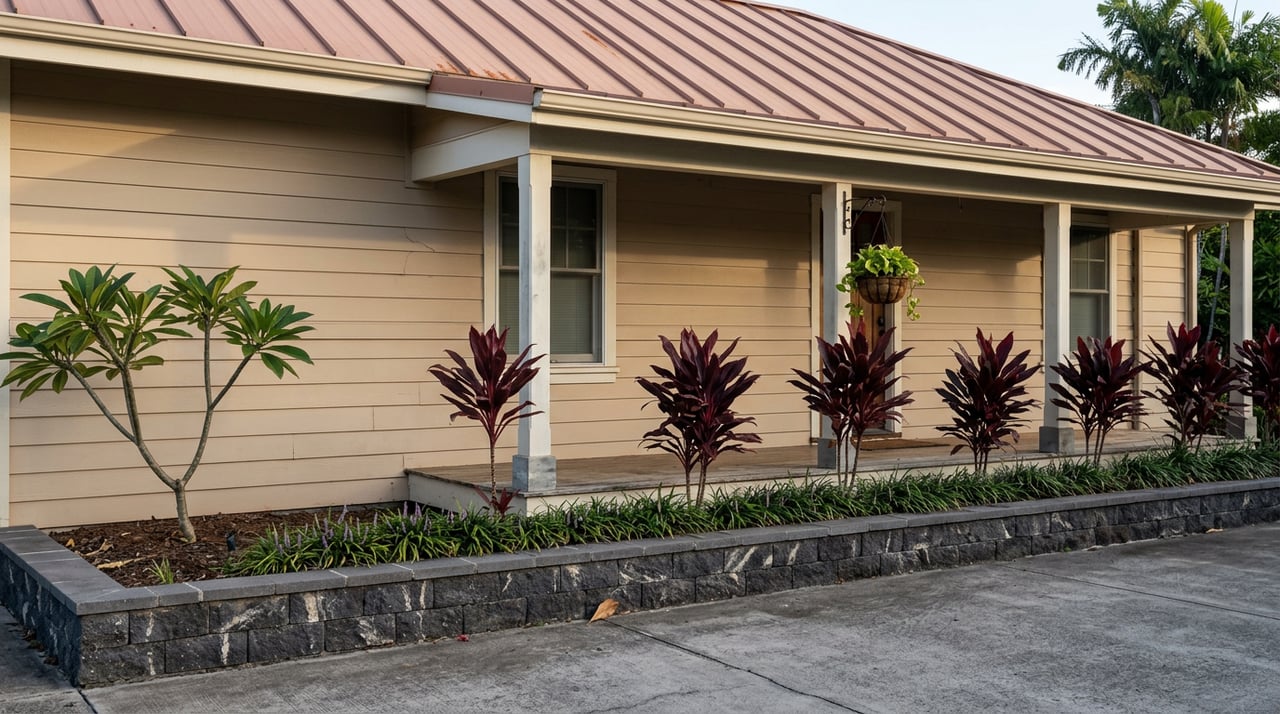
My 13th trip to Kona was a one-way ticket. Hurrah! Our dream came true. That is how it happens for a lot of us. You visit once and start counting the days until you can come back. Then you visit again. And again. And somewhere along the way you stop thinking about going home and start thinking about staying.
My home, sweet home for over 30 years. We never regretted it for a single day.
Kailua-Kona sits on the sunny, leeward side of Hawaii's Big Island, sheltered from the trade winds by the Kohala Mountains to the north and the great bulk of Mauna Kea to the east. More than 300 days of sunshine a year. The ocean is calm. The air smells like plumeria and salt. It is, without exaggeration, one of the most beautiful places on earth to wake up in the morning.
I have been waking up here for over 30 years and I still walk outside and stop for a moment. Every single morning.
Key Takeaways
- Kailua-Kona is the main town on the western, leeward side of Hawaii's Big Island, with a population of about 20,000 and approximately 39.9 square miles of land.
- Downtown Kona sits along Kailua Bay where King Kamehameha I made his seat of government from 1812 until his death in 1819.
- Alii Drive is the heart of town. Historic sites, oceanfront dining, the famous Kailua Pier, and some of the best people-watching in Hawaii.
- Every October since 1978 the Ironman World Championship starts and finishes at Kailua Pier, drawing athletes from around the world.
- Kona coffee, grown on the slopes of Hualalai above town, is among the most prized coffee in the world. The farms are worth a visit.
- This is not a resort town in the manufactured sense. It is a real community where people live, work, raise families, and grow old happily.
The History Beneath Your Feet
You cannot walk through downtown Kona without walking through history. That is not a figure of speech. The ground here has been significant for longer than most people realize.
King Kamehameha I, the warrior king who united the Hawaiian Islands, chose this bay as his seat of government in the final years of his life. He lived near the shore, not far from the Ahuena Heiau, the sacred temple he built at the edge of Kailua Bay. You can see the reconstructed heiau from the pier today, standing at the edge of the King Kamehameha Kona Beach Hotel. It is easy to walk past it without knowing what you are looking at. Stop and look.
Across the street on Alii Drive stands Hulihe'e Palace, built in 1838 from lava stone and coral. After Kamehameha's time it became the summer residence of the Hawaiian royal family. Today it is a museum maintained by the Daughters of Hawaii, with Victorian furnishings and royal artifacts inside that tell the story of the kingdom. Worth every minute of a visit.
Right across from the Palace is Mokuaikaua Church, the oldest Christian church in Hawaii. The congregation was established in 1820 when the first American missionaries arrived on the brig Thaddeus after 164 days at sea from Boston. The current stone structure, built partly from stones recycled from a nearby heiau, was completed in 1837. The steeple is the first thing cruise ship passengers see when their tender rounds into the bay, and it has been greeting visitors that way for nearly 200 years.
Three landmarks, one short stretch of Alii Drive. That is Kona.
Kailua Pier and the Spirit of the Bay
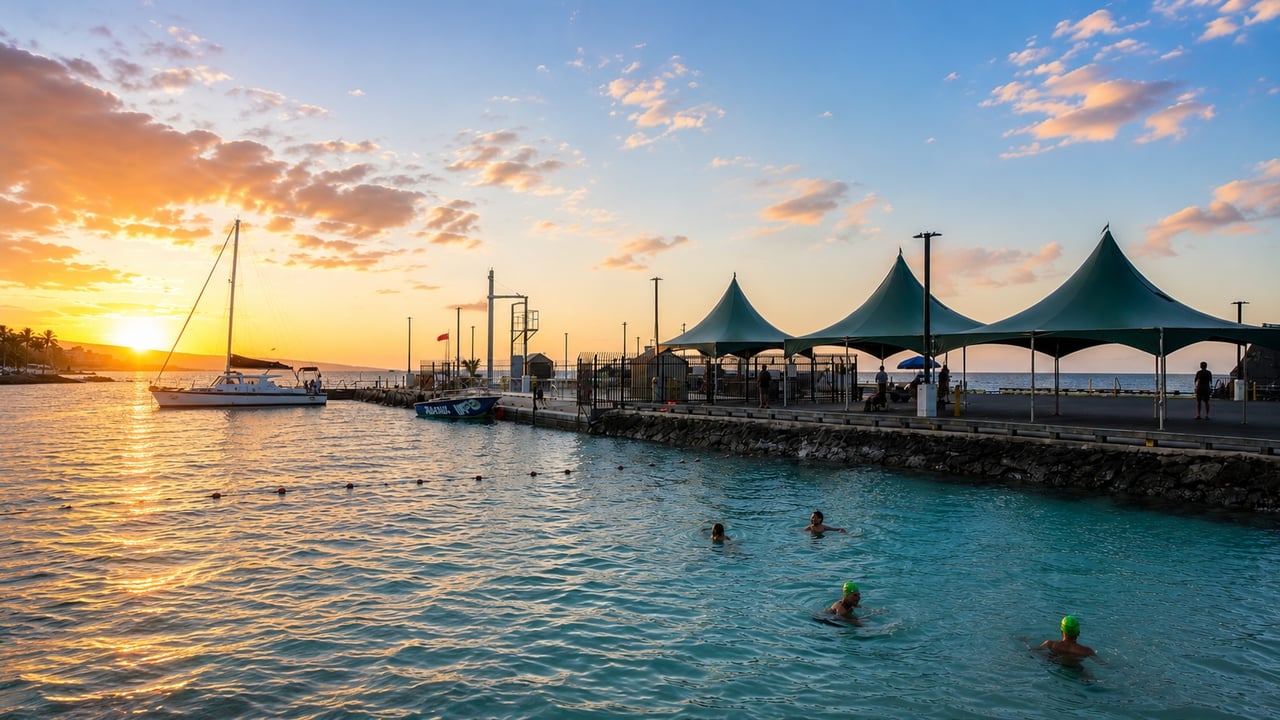
Kailua Pier is the center of everything. Morning paddlers launching their canoes. Snorkel boats loading up for Kealakekua Bay. Dive operators checking tanks. Cruise ships arriving weekly, their tenders ferrying passengers into the quaint, vintage downtown that drew them here in the first place. And every October since 1978, the starting line of the Ironman World Championship.
The Ironman began right here because of a debate among a group of Navy athletes about who was the fittest. The swimmers, the cyclists, or the runners. Someone proposed combining the three toughest existing races on Oahu into one event. Credit goes to John and Judy Collins, with a helping hand from Emily Gail, host of the "Talk Story" radio show, for bringing it all together. The first race had 15 competitors. Today it draws elite athletes from around the world for 2.4 miles of ocean swimming, 112 miles of cycling through the lava fields, and a full marathon to finish. It starts and ends at this pier. The entire town turns out for it.
The rest of the year the pier is simply a lovely place to be. The ocean sports here are genuine. Paddle a canoe. Swim in the bay. Snorkel along the rocks. Watch for dolphins in the morning and humpback whales in winter. Sit on the seawall in the late afternoon when the light goes gold and the fishing boats come back in.
Alii Drive: The Heart of Kona Town
Alii Drive runs south along the waterfront from the pier, and it captures everything that makes downtown Kona worth loving. Restaurants and coffee shops with ocean views. Boutiques and galleries tucked into open-air courtyards. Banyan trees big enough to shade half a block, their roots spilling across the sidewalk like something from a fairy tale. Bougainvillea everywhere, in every color.
Whether you dine at the King Kamehameha Kona Beach Hotel with the Ahuena Heiau right outside the window, or cross the street to Quinn's Almost by the Sea for a cold beer and fresh fish, you will feel what this town actually is. It is a community. People know each other here. The aloha spirit is not something printed on a tourism brochure. It is how people actually behave.
Walk Alii Drive in the morning and you will share the sidewalk with joggers, paddlers heading to the water, locals getting their Kona coffee, and visitors from the cruise ship who got up early to see the town before the heat of the day. Fill your soul with the aloha you find in this quaint, vintage downtown. Then wave the shaka. Someone will wave it back. That hand gesture means hello, howzit, goodbye, hang loose, and a dozen other things depending on context. Mostly it means you belong here too.
Kahaluu Beach Park: The Soul of the South End
Traveling south on Alii Drive, the beaches come one after another. A small beach right by the King Kamehameha Hotel. Another small one next to Hulihe'e Palace. Then near Honl's, a shaded tree-covered beach that locals love for its quiet. And finally Kahaluu Beach Park, where the snorkeling and the wide beach welcome families and visitors alike. A natural lava rock reef creates a protected cove just offshore, and the marine life inside it has been there as long as anyone can remember. Sea turtles rest on the rocks. Tropical fish school in the coral.
The marine advocates working to restore the coral growth here are doing important work. The reef took pressure during the years of peak visitor volume. The recovery is real and visible if you have been coming here long enough to compare. Come early on a weekday if you can. Bring reef-safe sunscreen, which is required in Hawaii. Look for zinc oxide or titanium dioxide on the label.
This is where the soul of the community shows up on a Saturday morning. Local families, visiting grandparents, kids learning to use a mask for the first time. Your soul gets refreshed here.
Honokohau Harbor: The Working Side of Kona
Just north of the airport, Honokohau Harbor is where you find the working waterfront that tourist Kona does not always show you. Big game fishing boats lined up at the docks. Charter vessels loading coolers. Whale watching tours departing early. The Harbor House Restaurant sits right at the water where you can watch all of it happen over a locally brewed beer and some of the freshest fish you will find anywhere.
The Hawaiian International Billfish Tournament has been centered off this shore since 1959. It predates the Ironman by nearly two decades and it is still one of the premier big game fishing tournaments in the world. Kona's waters have been famous for blue marlin and yellowfin tuna for as long as people have been fishing them.
Kona Coffee: The Slopes Above Town
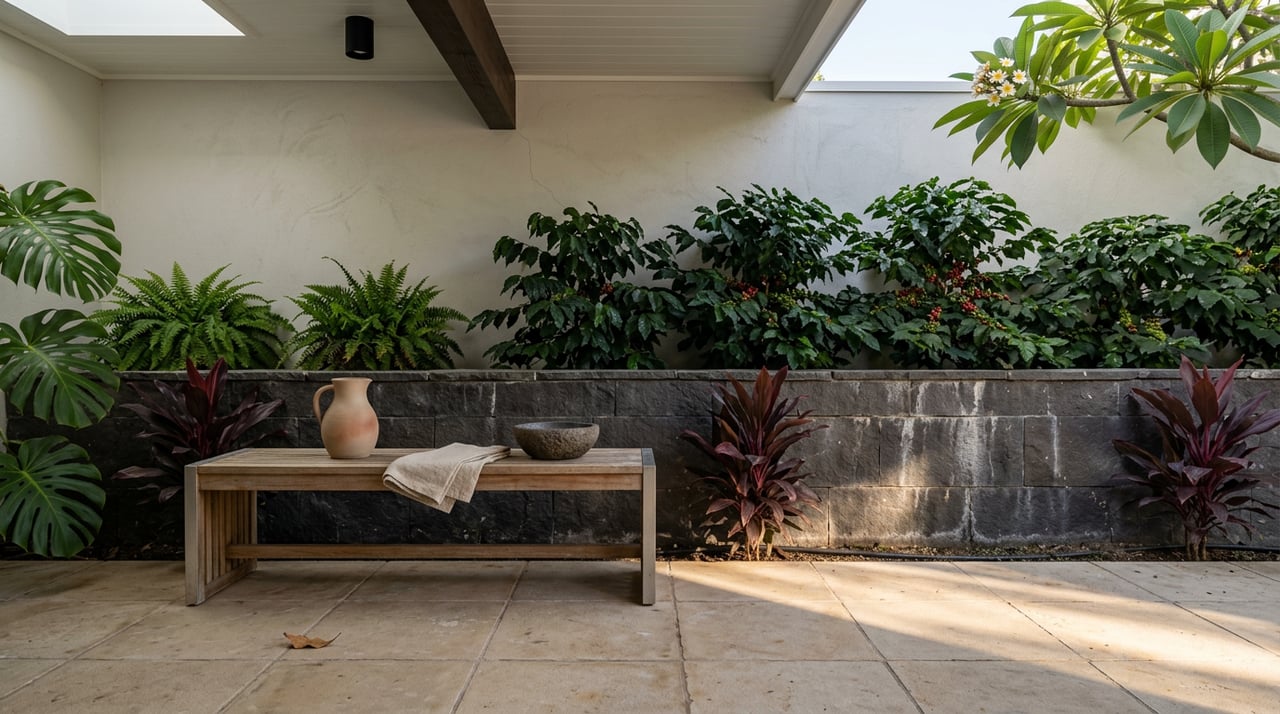
The town of Kailua-Kona sits at the base of Hualalai Mountain, and on the slopes above, between about 1,000 and 2,000 feet of elevation, some of the most sought-after coffee in the world is grown on small family farms. The climate on those slopes, warm mornings, afternoon clouds, and volcanic soil, produces a coffee with a flavor profile that serious coffee drinkers seek out specifically.
Every November the Kona Coffee Cultural Festival celebrates the harvest season at the Kona Old Airport grounds, with farm tours, cupping events, and the original coffee tree competition. Taking a tour of one of the farms is worth doing even if you are not a coffee person. The views from up there alone justify the drive.
A Few More Things Worth Knowing
The University of Hawaii established the Hawaii Community College Palamanui Campus north of town in 2015, adding an educational anchor to a community that was already drawing younger families.
Kona International Airport is only about 10 minutes north of town. Landing there for the first time is a memorable experience. You touch down on a runway surrounded by lava flats that look like the surface of the moon. Then you drive south and the town greets you with colorful bougainvillea in every shade, the fragrance of plumeria blossoms drifting through your window, and Banyan trees so wide their roots spread across half a city block. It never gets old.
South Point, the southernmost point of the United States, is a drive down the south end of the island from here. That is a story for another post.
And Keauhou, just a few miles south of Kahaluu, is a community unto itself. That one deserves its own post too, which is coming.
Brenda K. Kuessner is a licensed real estate agent with Kona Homes for Sale at Coldwell Banker Island Properties, Kailua-Kona, Hawaii. She has lived and worked on the Big Island for over 35 years and holds the Certified Residential Specialist (CRS) designation, earned by fewer than 5% of agents nationwide.