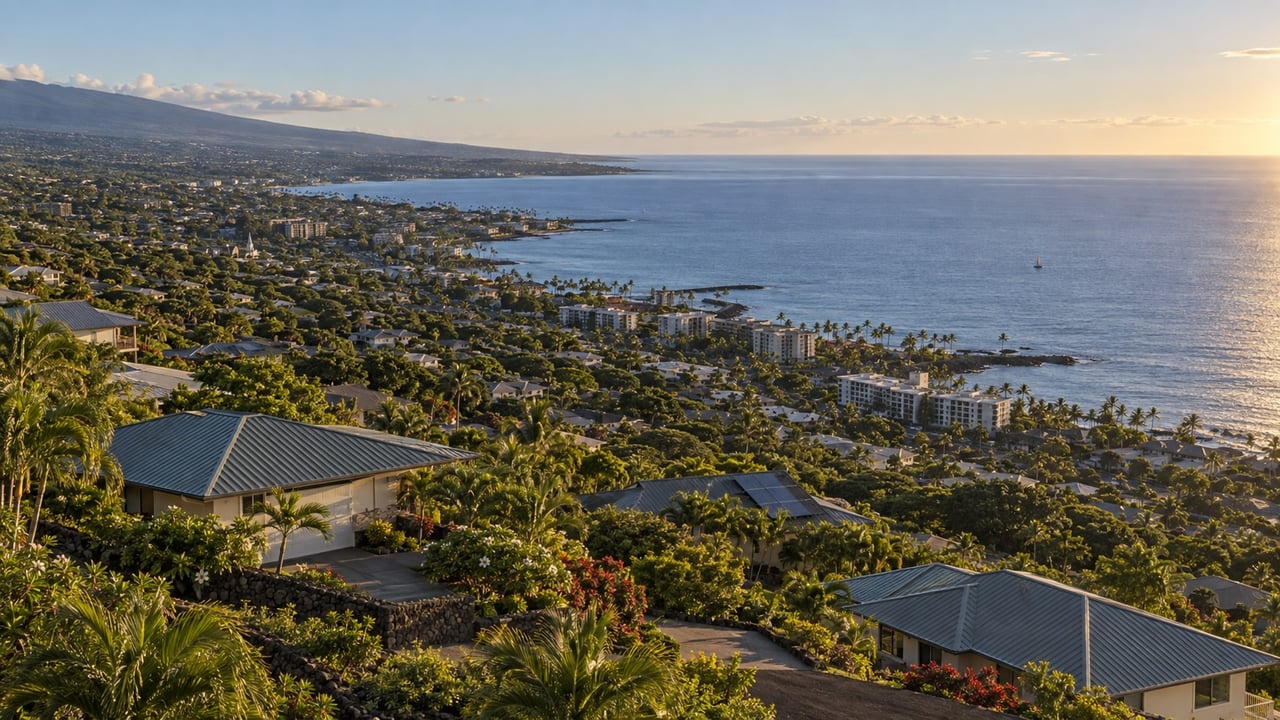
I have driven the road up to Holualoa more times than I could count over 35 years of selling real estate on the Big Island. Every single time I make that turn off Mamalahoa Highway and the elevation starts climbing through the coffee trees, I feel the temperature shift before I even register it consciously. The air changes. The light changes. You can still see the ocean below you through the trees. And you think: how does more of Kona not know about this place?
The truth is, plenty of people know about Holualoa. They just do not always know what they are looking at. It gets described in travel guides as a charming arts village, which is accurate but incomplete. For buyers seriously considering upland Kona living, Holualoa is a lifestyle question as much as a real estate question. Let me tell you what I actually know about this place.
Key Takeaways
- Holualoa sits roughly 1,400 feet above sea level on the slopes of Hualalai, about ten minutes above Kailua-Kona town. It is consistently five to eight degrees cooler than the coast.
- The village has a genuine gallery district with working artists, not just gift shops. The quality of what you find there is worth the drive up even if you are not buying.
- Holualoa is inside the Kona Coffee Belt. The coffee grown up here is some of the most sought-after in Hawaii, and several farms offer tours and tastings worth your time.
- First Friday events, the Coffee and Art Stroll, and the Kona Coffee Festival are the community anchors that bring the village alive on a regular basis.
- Buyers drawn to Holualoa are typically looking for something specific: space, cooler air, privacy, a slower pace. If that is you, this is worth understanding before you start your search.
The Village Itself
Holualoa is not a tourist destination that has been packaged for visitors. It is an actual working community that happens to have a cluster of galleries, coffee farms, and a post office on Mamalahoa Highway running through the middle of it. The Holualoa Inn, the studio galleries, the old buildings with their painted facades. This is not a reconstruction of what an upcountry Hawaiian coffee village looks like. It is one.
The gallery district is the heart of it. You will find working artists showing ceramics, woodwork, paintings, and sculpture, people who chose Holualoa because the light is good and the pace allows for actual work. Koa furniture makers, weavers, photographers who have spent years capturing the slopes of Hualalai. The quality varies, as it does in any gallery district, but the genuine pieces are genuinely good. If you visit once without buying anything, you will understand why people come back.
First Friday After Dark happens on the first Friday of each month and is exactly what it sounds like: the galleries stay open late, there is live music, and the village fills up with people from all over the Kona coast who have been coming for years. If you want to understand the community feel of Holualoa, show up on a First Friday. You will meet your neighbors, hear about who just put a house on the market, and leave knowing more about upcountry Kona than any real estate listing can tell you.
The Coffee
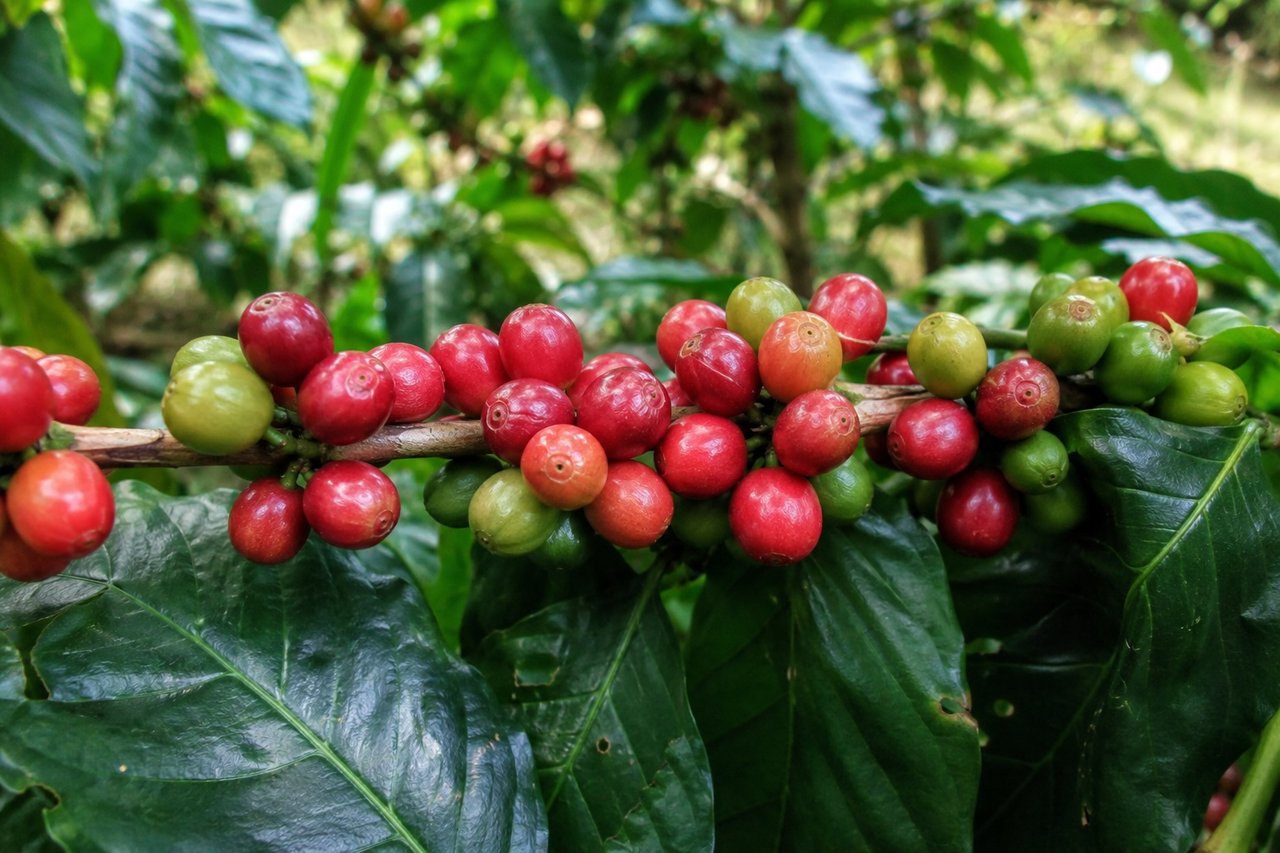
Holualoa is inside the Kona Coffee Belt, which runs along the slopes of Hualalai between roughly 800 and 2,000 feet elevation on the west side of the island. The combination of volcanic soil, afternoon cloud cover, and the specific temperature range at this elevation produces coffee that has been competing at the top of the specialty market for decades. The farms up here are not big commercial operations. Most are small, family-run, and selling directly to people who seek them out.
Several Holualoa farms offer tours that are worth doing even if you are not a serious coffee person. Walking a working farm, seeing the cherry fruit on the trees, watching the sorting and drying process. It gives you a specific understanding of what makes this place different that no amount of reading does. The Kona Coffee Cultural Festival, which runs for about ten days in November, uses Holualoa as one of its anchors and brings together farm tours, tastings, competitions, and cultural events that draw people from across the island and well beyond it.
The Coffee and Art Stroll is the more local version of that energy, a daytime event that moves through the village connecting the galleries and the coffee stops in a way that lets you cover the whole stretch of Mamalahoa Highway on foot. It is one of those events where you end up talking to a ceramicist about growing conditions for Typica beans and realize that the people who chose to live up here chose it for very specific reasons.
The Feel of Living Up Here
I have had buyers describe Holualoa as feeling like Kona twenty years ago. I understand what they mean. The pace is slower. The community is smaller and more connected. People know each other at the post office. There is a church that has been there longer than most of the houses around it. The road through town is narrow enough that you slow down whether you mean to or not.
What that means practically for buyers is that Holualoa attracts a specific kind of person. Artists, writers, retirees who want space and quiet without being far from town. People who have been visiting the island for years and finally decided the coast was not what they were looking for. Coffee farmers who are doing it seriously. People who moved here from somewhere expensive and realized that 1,400 feet above a Pacific harbor is a very reasonable place to make a life.
The properties up here reflect that character. You find older coffee farm homes with large lots and mature fruit trees. Custom builds tucked into the slope with ocean views that take your breath away in the mornings before the clouds build. Agricultural parcels with room for gardens, orchards, livestock. These are not resort properties and they do not pretend to be. They are working places with a specific beauty that only reveals itself when you spend time up here.
What Buyers Should Know
If you are considering a property in or near Holualoa, a few things are worth understanding before you start looking at listings. Utilities vary more up here than in town or on the coast. Some properties are on county water, others use rain catchment. Septic rather than sewer is standard. Cell coverage and broadband vary by address and terrain. These are not dealbreakers. I have closed plenty of transactions up here. But they belong in your due diligence checklist early, not after you have already decided on a property.
The road situation matters too. Mamalahoa Highway runs through the village but many of the properties up here sit on narrower roads that climb steeply off it. Access roads that look fine in a photo can be a different experience in a heavy rain or in a car without clearance. Visit the specific property at different times of day and in different conditions if you can. The fog that rolls through in the evening is part of the charm and also a real thing you will be driving through.
And the buyer pool for Holualoa properties skews heavily toward mainland buyers and people who have been visiting the island for years. Most serious buyers will not have been to the property in person before making an offer. Which means the listing photography, the disclosure documentation, and the agent representation all need to do more work than they would for a local buyer who drives by on Saturday. Our post on virtual tours for upcountry Kona sellers covers how to present a Holualoa property to a buyer who is making decisions from a distance.
Frequently Asked Questions
Where exactly is Holualoa on the Big Island?
Holualoa sits on Mamalahoa Highway on the slopes of Hualalai, roughly 1,400 feet above sea level and about ten minutes above Kailua-Kona town by car. It is inside the Kona Coffee Belt, which runs along the western slope of the island between roughly 800 and 2,000 feet. From many points in the village you can see the ocean below through the coffee trees.
What is the Holualoa gallery district?
A cluster of working artist studios and galleries along Mamalahoa Highway through the village. You will find ceramics, woodwork, paintings, sculpture, and photography from artists who chose to live and work in Holualoa specifically. The quality is genuine. First Friday After Dark, on the first Friday of each month, is the best time to see the galleries open late with music and the full community out.
What is the Kona Coffee Cultural Festival and does it take place in Holualoa?
The Kona Coffee Cultural Festival runs for about ten days each November celebrating the region's coffee industry. Holualoa is one of its primary locations, with farm tours, coffee tastings, competitions, and cultural events. It draws visitors from across the island and beyond and is one of the best ways to understand what makes the Kona Coffee Belt distinctive if you have never spent time up here during harvest season.
What kind of properties are available in Holualoa?
A mix of older coffee farm homes on agricultural lots, custom builds with ocean views, and rural residential properties with larger parcels. Most are single-family homes on individual lots with more land than comparable properties in Kailua-Kona town. Some are working coffee farms or have productive fruit orchards. It is not a condo market. The inventory is smaller and the properties tend to be more individual than in established coastal developments.
How is the weather in Holualoa compared to coastal Kona?
Consistently cooler, with more afternoon cloud cover and slightly more rainfall than the coast. At 1,400 feet the temperature typically runs five to eight degrees cooler than Kailua-Kona on the same day. Mornings are often clear with strong ocean views. Afternoons bring clouds that build on the slope, which moderates the heat and gives the area its lush, green character. Fog comes through in the evenings. Many buyers find it the most comfortable climate on the island for year-round living.
How far is Holualoa from Kailua-Kona town?
About ten minutes by car up Hualalai Road or Mamalahoa Highway from the Ali'i Drive corridor. Close enough that running errands in town is not a burden, far enough that you feel genuinely separate from the coastal energy. For buyers who want the convenience of town with the quiet of upcountry, that ten-minute window is often the deciding factor.
If you are thinking about Holualoa as a place to live and want to talk through what is available and what the ownership experience actually looks like up here, that is a conversation I have been having for 35 years. Reach out to us at Kona Homes for Sale or call 808-937-0430.
Brenda Kuessner holds the ABR, CRS, e-PRO, GRI, and GREEN designations and has sold real estate on the Big Island for 35 years. Mark Davis, Esq. is a licensed real estate broker (RB-23769) with Kona Homes for Sale at Coldwell Banker Island Properties, Kailua-Kona, Hawaii. He practiced as a transactional and litigation real estate attorney for 35 years before moving to the Big Island full time. He currently serves as a member of the Hawaii County Real Property Tax Board of Appeal. Together they serve buyers and sellers across the Kona and Kohala Coast market. This post is for general informational purposes only and does not constitute legal or tax advice.