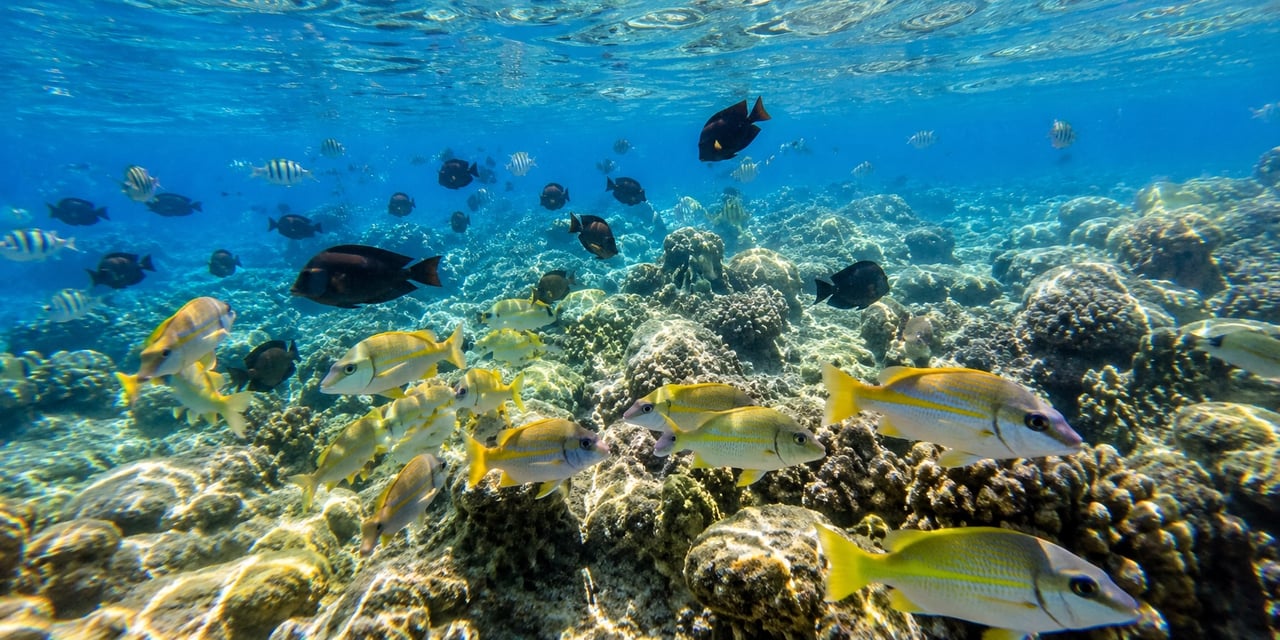
I did not move to the Big Island for the real estate market. I moved here because after decades of working in California courtrooms and conference rooms, I wanted to be somewhere I could walk out my door and into the ocean. My wife and I had been visiting the island for years before we finally made it permanent, and one of the things that kept pulling us back was the water.
The Kona coast has some of the clearest, most life-filled water I have ever been in. I am not a casual snorkeler. I am out there regularly, at specific spots, at specific times of day, because I have learned over the years what makes the difference between a good session and a great one. These are my four favorite shore-access snorkeling spots in West Hawaii. All reachable without a boat, all genuinely worth your time.
Key Takeaways
- Kealakekua Bay is the best snorkeling on the Kona coast, full stop. The visibility, the marine life, and the coral health are in a different category from everything else.
- Two Step at Honaunau Bay is the easiest high-quality snorkeling on the coast. Deep clear water the moment you step in, no gradual wade required.
- Kahaluu Beach Park on Ali'i Drive is the most accessible option in town and a good starting point for anyone new to snorkeling in Kona.
- Beach 69 (Waialea Bay) up on the Kohala coast is the local's quiet choice, particularly for anyone staying at Mauna Lani or Waikoloa.
- Morning is almost always better than afternoon at every one of these spots. Calmer water, fewer people, better visibility.
Why the Kona Coast Snorkels So Well
A few things combine to make West Hawaii exceptional for snorkeling. The leeward side of the island is protected from the trade winds that pound the windward coast, which means calmer water most of the time. The island has no rivers, so there is no runoff muddying the nearshore water the way you see on other islands. The volcanic substrate creates complex reef structure that supports dense marine ecosystems. And the water temperature, sitting around 75 to 80 degrees year-round, means you can stay in for hours without a wetsuit, though a shorty is nice in the early morning.
Add it together and you get some of the most reliable snorkeling conditions in Hawaii on any given day. Which is why I am out there as often as I am.
1. Kealakekua Bay (Captain Cook Monument)
This is the best snorkeling on the Kona coast. I will not hedge on that. The visibility routinely runs 80 to 100 feet. The coral is healthy and dense. The fish life is extraordinary. Spinner dolphins work the bay regularly. If you have one snorkeling day on the Big Island, this is where you spend it.
Kealakekua Bay is a Marine Life Conservation District, which means no fishing, no collecting, and the marine life knows it. The fish are unafraid, the reef is intact, and the whole place feels like what the coast used to look like everywhere before human pressure took its toll.
The bay sits about 12 miles south of Kona town. There are three ways to get there without a boat.
The Kaawala Trail is my preferred approach. It is a 2-mile hike down to the monument and 2 miles back up, with about 1,300 feet of elevation gain on the return. The trail is not casual. It is rocky, it is exposed, and the climb back in the heat of the day will get your attention. Bring real shoes, not flip flops. Bring more water than you think you need. I hike it roughly once a month and I go early, typically arriving at the water by 7 or 7:30 in the morning. The tour boats start arriving around 9 and the bay gets busy fast. Being there before the boats shows up is a different experience entirely.
Kayak or paddleboard from Napoopoo Beach or Manini Beach is the other popular approach, about a mile each way on the water. Rental companies handle the State permits you need to land at the monument side. You cannot bring the kayaks ashore at the monument itself but snorkeling while holding onto the kayak in that water is genuinely wonderful. This is a great full-day option if you want to make an event of it.
Swimming the mile each way from Manini Beach is possible and I have done it a few times. This is an advanced option. You need to be comfortable in open water and confident in your own fitness. But there is nothing quite like arriving at one of the most famous snorkeling spots in Hawaii under your own power.
One note on Manini Beach itself: it is a small, somewhat rocky beach just inside the bay, accessible by road down Napoopoo Road from the highway. The snorkeling directly off Manini is decent, and for people who cannot manage the hike or the kayak trip, it offers a legitimate way to experience the bay.
2. Honaunau Bay (Two Step)
Two Step is my recommendation for anyone who wants world-class snorkeling without the commitment of the Kealakekua trail. It gets its name from the two natural lava rock ledges used to enter the water. You step down, step again, and you are immediately in deep, clear water surrounded by fish. There is no gradual wade, no sandy shore entry, no shallow reef to navigate carefully. You are just in.
The marine life here is exceptional and the visibility is consistently excellent. The coral structure is complex and the fish density is high. I have seen green sea turtles every single time I have visited. Spinner dolphins work the outer bay regularly.
Honaunau Bay sits right next to Pu'uhonua o Honaunau National Historical Park, the Place of Refuge. If you have not been to the park, spending the morning at Two Step and the early afternoon walking the historical park is about as good a day as the Big Island offers. The park is a genuine window into pre-contact Hawaiian culture, and it is worth more than a quick stop.
I prefer late afternoon at Two Step. The mornings draw a crowd early, particularly on weekends, and the parking is limited. By mid-afternoon, a lot of the tour groups have moved on and you can have the place to yourself. The light is also beautiful in the late afternoon, particularly in winter when the sun angle changes.
3. Kahaluu Beach Park
Kahaluu Beach Park is the right answer when you want quality snorkeling close to town without driving south. It sits right on Ali'i Drive, a few miles below downtown Kona, and it offers easy entry, lifeguards on duty, parking, showers, and restrooms. For families with kids, for people new to snorkeling, or for days when you just want a quick hour in the water without a production, Kahaluu is the move.
The reef has seen pressure over the years from visitor volume and the gradual impacts of warming water. It is not what it was twenty years ago. But there are still substantial fish populations close to shore, and on a calm morning the visibility is good. The protected cove structure keeps the water calm even on days when the open coast is rough.
One practical note: Kahaluu gets busy on weekends, particularly mornings. A weekday mid-morning visit, when the overnight crowd has cleared and the afternoon crowd has not yet arrived, is the sweet spot.
Reef-safe sunscreen matters here more than anywhere, both because of the reef's health and because there are rangers and volunteers who take it seriously. Oxybenzone and octinoxate are banned in Hawaii. Mineral sunscreens (zinc oxide or titanium dioxide) are the right choice. Some products are labeled reef-safe without actually being free of the harmful compounds so read the ingredients, not just the label.
4. Waialea Bay (Beach 69)
Beach 69 (Waialea Bay) is the Kohala coast's best-kept open secret, or it used to be before the word got out. It sits about 20 miles north of Kona near Hapuna Beach State Recreation Area, and it draws a fraction of the crowd that Hapuna does despite excellent snorkeling along multiple reef sections accessible from shore.
The name comes from the old highway marker that used to mark the turnoff. The locals know it as Beach 69. It is a legitimate snorkeling destination, not just a pretty beach. Multiple reef structures extend from the shore, the visibility is consistently good, and dolphins work the bay regularly. In winter, whale sightings from the beach are common.
I point people toward Beach 69 when they are staying up on the Kohala coast at Mauna Lani, Waikoloa, or the surrounding resort communities. It is close, it is quieter than the main resort beaches, and the snorkeling quality is genuinely high. Morning is the right time here as well. The afternoon trades can kick up a chop that reduces visibility and makes the surface conditions less pleasant.
A Few Things Worth Knowing About Snorkeling the Kona Coast
Current and conditions change. Kona is calm most of the time but not always. Check the surf report before you go, particularly for spots like Kealakekua where the commitment of the hike makes a blown-out day a real waste of time. The NOAA National Weather Service puts out Hawaii surf reports and the surf app Magic Seaweed covers most of the Kona spots.
Marine life encounters are real here. I am not talking about the staged kind. Green sea turtles are common at almost every spot on this list. Spinner dolphins work Kealakekua and Honaunau regularly. Manta rays patrol the deeper areas of the coast, particularly at night, and are occasionally spotted during daytime snorkeling. Whale season runs roughly November through April and humpbacks are sometimes visible from the surface at Beach 69 and Kealakekua.
Respect the marine sanctuary rules. Do not touch or stand on coral. Give turtles and dolphins appropriate distance. Hawaii law requires staying at least 50 yards from spinner dolphins and not swimming toward them. At Kealakekua, the Marine Life Conservation District rules are enforced. These places are special because they have been protected. The rules exist for a reason.
The Kona coast extends a long way. The four spots here are my personal favorites, but excellent snorkeling exists all along the coast from the Kohala resort communities south through Kona and into South Kona. If you are spending time on the island, you will find your own spots.
What Snorkeling Has to Do With Real Estate
A lot of buyers who eventually purchase on the Kona coast came here first as snorkelers, divers, or fishermen. They visited, fell in love with the water, and started thinking about what it would mean to live here rather than just visit. That was roughly my path, and it is the path I hear from clients regularly.
If you are in that phase, loving what you see on the coast and starting to wonder about what ownership actually looks like, the questions I hear most often are about what the market is like, what a non-resident buyer needs to know, and how Hawaii's ownership structures differ from the mainland. We cover a lot of that territory in our guides on leasehold vs. fee simple, HARPTA withholding for non-resident sellers, and our Kona relocation guide.
Or feel free to reach out directly. Brenda and I talk to people at exactly this stage all the time. It is one of the more enjoyable conversations in this business.
Mark Davis, Esq. is a licensed real estate broker (RB-23769) with Kona Homes for Sale at Coldwell Banker Island Properties, Kailua-Kona, Hawaii. He practiced as a transactional and litigation real estate attorney for 35 years before moving to the Big Island full time. He currently serves as a member of the Hawaii County Real Property Tax Board of Appeal. Brenda Kuessner holds the ABR, CRS, e-PRO, GRI, and GREEN designations and has sold real estate on the Big Island for 35 years. Together they serve buyers and sellers across the Kona and Kohala Coast market. This post is for general informational purposes only and does not constitute legal or tax advice.