Two of the most common neighborhoods on a Kona buyer's shortlist are the Kona Palisades and Keauhou. They sit on opposite sides of Kailua-Kona town, the Palisades upslope to the north above the airport, Keauhou south of town along Ali'i Drive. They offer genuinely different living environments. Climate, housing type, HOA structure, utilities, drive times, and price per square foot all tell different stories in each area. This post lays out the comparison so buyers can make the choice based on how they actually want to live.
Key Takeaways
- The Kona Palisades is the upland residential area above the airport in North Kona, with cooler temperatures, more space, and a suburban neighborhood character. Keauhou is south of town along Ali'i Drive with a warmer coastal feel, more condos, and closer proximity to beaches.
- Temperature in the Palisades runs roughly 5 to 8 degrees cooler than the coast on most days. Keauhou is warmer and sunnier with the beach access that drives buyer interest there.
- Keauhou has a higher proportion of condo inventory and HOA communities. The Palisades has more single-family homes on individual lots, ranging from modest to custom builds.
- Utilities vary more in the Palisades than in Keauhou. Many Palisades properties use septic rather than sewer, and some use catchment water. Most Keauhou properties are on county water and sewer.
- Both areas are primarily in USGS Lava Hazard Zone 4, relevant for insurance and lending. Keauhou coastal properties require FEMA flood zone review.
What the Kona Palisades Actually Is
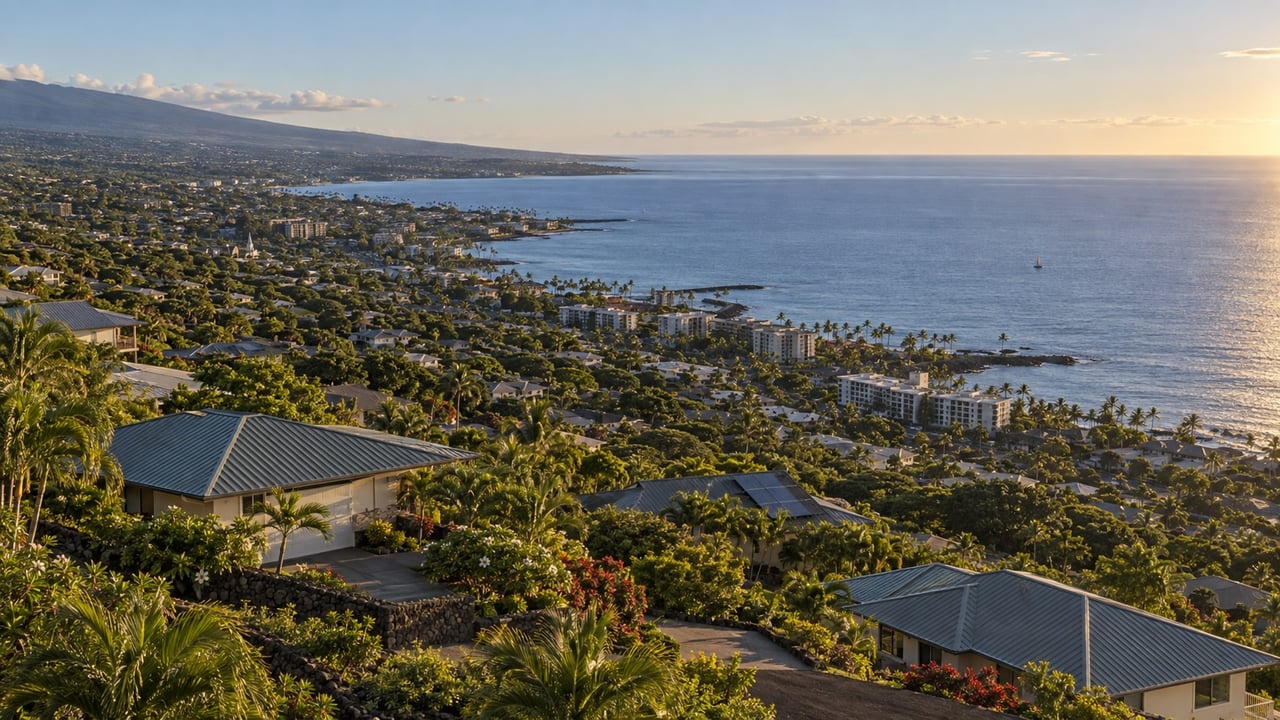
The Kona Palisades is the collective name for the upland residential neighborhoods above the Kona International Airport on the slopes of Hualalai. It is not one subdivision. It encompasses Kona Palisades Estates, Kona Highlands, Kona Acres, Kona Heavens, Pualani Estates, Lokahi Makai, and several other neighborhoods running from roughly 500 to 1,800 feet elevation. The Kaloko area, north of town near the industrial corridor above Costco and Home Depot, sits at the lower elevation end of this zone. Kaiminani Drive is the main road that runs through the area. It is a road, not a neighborhood name, though you will see it used both ways in listings.
The Palisades character is suburban with a mauka feel. Lots are typically larger than what you find in town, the vegetation is greener, and the temperature is noticeably cooler than the coast. Mornings often come with clear ocean views and the afternoons bring cloud cover that keeps temperatures moderate. For buyers who want space, privacy, cooler nights, and a quieter residential feel without driving to Holualoa or South Kona, the Palisades delivers that within 10 to 20 minutes of town.
What Keauhou Actually Is
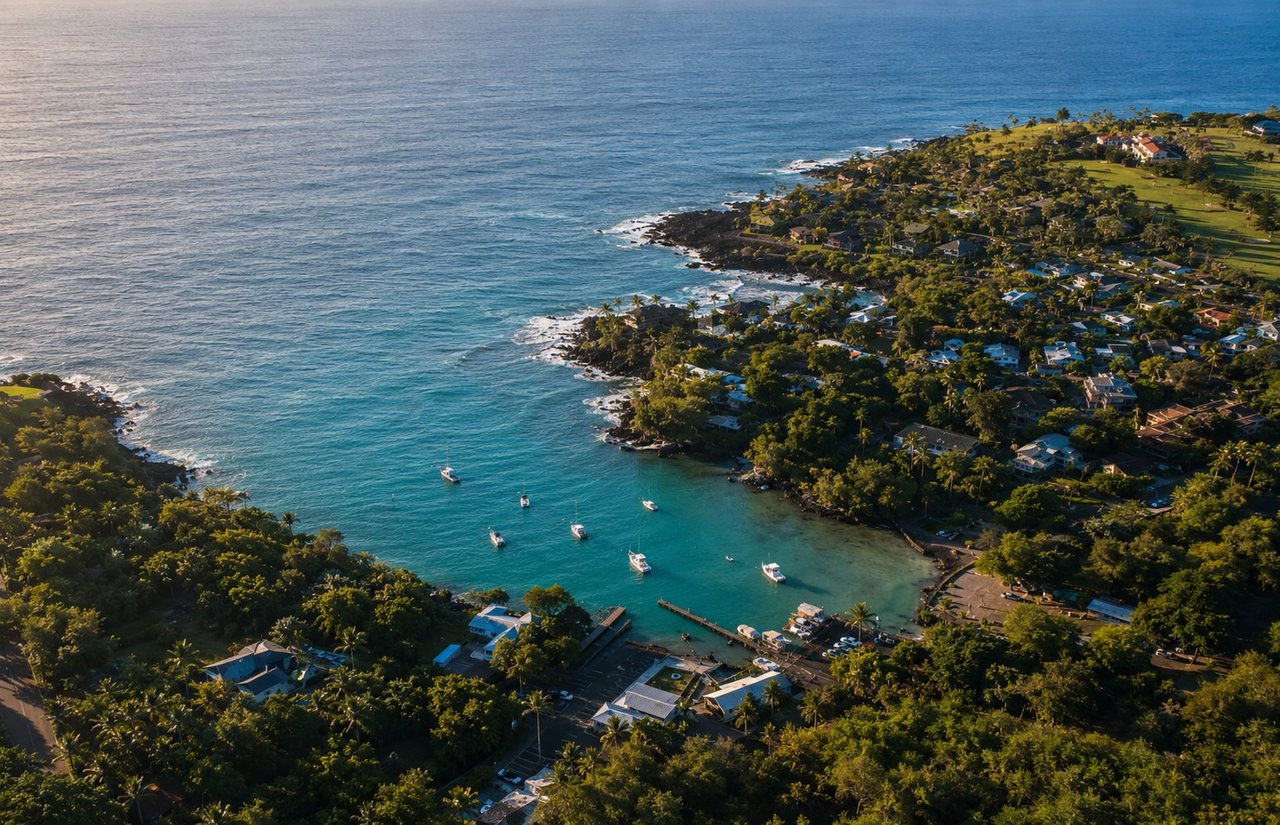
Keauhou is the area south of downtown Kailua-Kona along Ali'i Drive, centered around Keauhou Bay and the Keauhou Shopping Center. It includes a mix of condo complexes, townhomes, and single-family homes with a generally coastal or near-coastal character. The Keauhou Resort area, Kanaloa at Kona, Keauhou Punahele, and several other condo developments make up a significant portion of the inventory here. It is one of the most popular areas for second-home buyers and retirees who want beach and ocean access as a regular part of daily life.
The feel of Keauhou is warmer, sunnier, and more resort-adjacent than the Palisades. Ali'i Drive connects directly to downtown Kona and to the snorkeling beaches and tide pools south of town. For buyers who picture morning coffee with an ocean view, afternoon snorkeling, and evening dining without getting in a car, Keauhou delivers that in a way the Palisades does not.
Climate: The Real Difference
Both areas sit on the leeward side of Hualalai, which means generally sunny weather with less rainfall than windward Hawaii. But elevation changes things quickly in Kona. The Palisades at 1,000 feet runs roughly 3.5 degrees cooler than the coast for every 1,000 feet of elevation, which puts mid-Palisades homes typically 5 to 8 degrees cooler than Keauhou on the same day. Upper Palisades neighborhoods like Kona Highlands run cooler still. Afternoons often bring cloud cover that Keauhou does not see.
For buyers from warmer climates who want year-round cooling without air conditioning, the Palisades elevation delivers that. For buyers who came to Hawaii for warm ocean weather and want to feel like they are on vacation year-round, Keauhou is the better climate fit. This is one of those choices where visiting at different times of day, including an evening in the Palisades and an evening in Keauhou, makes the decision much clearer than any written description.
Housing Types and HOA Structure
The Kona Palisades is primarily single-family residential. Most homes are on individual lots ranging from approximately 7,500 square feet in the denser subdivisions to one-acre agricultural lots in areas like Kona Acres. Styles run from modest 1970s and 1980s ranch homes to newer custom builds with ocean views. HOA communities exist. Several Palisades subdivisions have homeowner associations with CC&Rs covering architectural standards and common area maintenance, but they are generally less complex than the condo association structure common in Keauhou.
Keauhou has a higher proportion of condominium inventory. Many of the developments along Ali'i Drive are established condo complexes with monthly HOA fees that cover exterior maintenance, common areas, pools, and in some cases utilities. This is a meaningful distinction for buyers evaluating total monthly carrying costs. A condo in Keauhou with a $600 to $900 monthly HOA fee covers expenses that a Palisades homeowner pays separately. Neither is inherently better, but the structure is different and needs to be factored in when comparing prices.
For buyers considering Keauhou condos, the HOA financial health matters as much as the monthly fee number. Reserve fund strength, any pending special assessments, and master insurance declarations all belong on your review list before you remove contingencies. Our post on HOA fees in Kona communities covers what to look for in those documents.
Utilities: Where They Differ
Keauhou's established developments are mostly on county water and sewer. That is the utility picture most buyers expect and it simplifies ownership. The Palisades is more variable. Many mid-slope Palisades neighborhoods are on county water but use septic rather than sewer. Some properties in the upper Palisades use rain catchment for water. Older parcels in the broader North Kona area may have cesspools rather than septic, which carries its own disclosure and upgrade considerations under state programs.
If you are seriously considering a Palisades property, confirm the specific water source and wastewater system for that address before you write an offer. Do not assume based on the general neighborhood. For catchment properties, include water quality testing in your inspection process. For septic, request the permit, as-built plans, and service history. For cesspools, ask about state upgrade requirements and timeline. Our post on seller disclosure requirements in Kona covers why utility documentation matters so much in this market.
Broadband and cell coverage also vary more in the Palisades than in Keauhou's established developments. If you work remotely, test connectivity at the specific property address before you commit.
Hazards, Insurance, and Lava Zones
Both the Kona Palisades and Keauhou sit primarily in USGS Lava Hazard Zone 4, which covers the flanks of Hualalai. Zone 4 is not the highest-risk designation. The active rift zones of Kilauea are Zones 1 and 2. But Zone 4 does factor into insurance underwriting and lender requirements. Confirm any specific parcel's lava zone early in your search rather than after you have made a price commitment.
Keauhou coastal properties add FEMA flood zone review to the hazard picture. Properties at or near the shoreline may be in Special Flood Hazard Areas requiring lender-mandated flood insurance, and tsunami evacuation zone status applies to any coastal location. Pull both the flood zone map and the tsunami evacuation map for any specific Keauhou coastal property you are seriously considering. Our post on elevation and hazard zones in North Kona covers the lava zone picture in more detail.
Access and Drive Times
Both areas are within reasonable distance of town services, but the drives feel different. From the Kona Palisades, most daily errands, Costco, the hospital, the airport, run 10 to 20 minutes depending on your specific address and elevation. Queen Kaahumanu Highway and Kaiminani Drive are the main connectors. Traffic is manageable by most standards but does build during school hours and tourist peaks.
From Keauhou, downtown Kona is a 10 to 15 minute drive north along Ali'i Drive or Kuakini Highway. The Keauhou Shopping Center provides grocery, pharmacy, and retail options without going into town. The Palisades does not have that kind of commercial anchor nearby. Most shopping means a drive down toward the highway corridor.
For buyers who travel frequently, the airport is closer to the Palisades than to Keauhou. For buyers who want to walk to the beach or be close to Ali'i Drive restaurants, Keauhou wins on proximity.
How to Make the Choice
The buyers who are happiest in the Palisades typically prioritized cooler evenings, more space, quieter surroundings, and single-family ownership with more control over their lot and structure. They were comfortable with the drive to town and the variable utility picture that comes with more rural ownership in Hawaii.
The buyers who are happiest in Keauhou typically prioritized beach and ocean access, a lock-and-leave lifestyle, and the convenience of an established coastal community. They were comfortable with HOA governance and fees as part of the ownership structure and found the condo or townhome format suited how they planned to use the property.
Neither is the wrong answer. The right choice depends on how you actually plan to live there, how much you value outdoor living versus indoor comfort, and what your total cost of ownership budget looks like when insurance, HOA fees, and utility costs are all factored in.
Frequently Asked Questions
What is the Kona Palisades and where is it?
The Kona Palisades is the collective name for the upland residential neighborhoods above the Kona International Airport on the slopes of Hualalai in North Kona. It includes Kona Palisades Estates, Kona Highlands, Kona Acres, Pualani Estates, Kona Heavens, and several other subdivisions running from roughly 500 to 1,800 feet elevation. Kaiminani Drive is the main road through the area. The term "Kalaoa" refers to the broader census-designated area that encompasses these neighborhoods, though locals typically use the specific subdivision names or just say "the Palisades."
How much cooler is the Kona Palisades than Keauhou?
Roughly 5 to 8 degrees Fahrenheit cooler on most days for mid-Palisades elevations around 1,000 feet. Upper Palisades neighborhoods at 1,400 to 1,800 feet are cooler still. The temperature difference is most noticeable in the evenings and at night, and the Palisades typically sees more afternoon cloud cover than the coastal Keauhou area.
Are most Keauhou properties condos?
A significant portion of Keauhou inventory is condominiums and townhomes in established HOA communities, particularly along the Ali'i Drive corridor. Single-family homes also exist in Keauhou, but the condo proportion is higher than in the Palisades. Monthly HOA fees in Keauhou condo developments vary considerably by building and cover different things, so review the fee structure and what it includes carefully before comparing prices.
What utility issues should I watch for in the Kona Palisades?
Utility infrastructure varies by address in the Palisades. Many properties are on county water but use septic rather than sewer. Some use rain catchment for water supply. Older parcels may have cesspools. Broadband and cell coverage vary more upland than in established coastal developments. Confirm the specific water source and wastewater system for any property you are seriously considering before you write an offer.
Which area is better for beach access?
Keauhou, by a significant margin. Keauhou Bay, several accessible beaches along Ali'i Drive, and the snorkeling spots south of town are all within easy reach from Keauhou. From the Palisades, ocean access requires a drive down to the coast, typically 15 to 25 minutes depending on your specific address and destination. If daily or frequent beach access is a priority, Keauhou is the better choice.
Are both areas in a lava hazard zone?
Yes, both are primarily in USGS Lava Hazard Zone 4, which covers the flanks of Hualalai. Zone 4 is a lower-risk designation than the active rift zones but does affect insurance underwriting and lender requirements. Confirm any specific parcel's zone designation early. Keauhou coastal properties also require FEMA flood zone review, which Palisades properties generally do not.
If you are working through the Kona Palisades versus Keauhou decision and want to talk through specific neighborhoods, price ranges, or properties, that is exactly the kind of local comparison we help buyers make. Reach out to us at Kona Homes for Sale or call 808-854-5432.
Mark Davis, Esq. is a licensed real estate broker (RB-23769) with Kona Homes for Sale at Coldwell Banker Island Properties, Kailua-Kona, Hawaii. He practiced as a transactional and litigation real estate attorney for 35 years before moving to the Big Island full time. He currently serves as a member of the Hawaii County Real Property Tax Board of Appeal.
Brenda Kuessner holds the ABR, CRS, e-PRO, GRI, and GREEN designations and has sold real estate on the Big Island for 35 years. Together they serve buyers and sellers across the Kona and Kohala Coast market. This post is for general informational purposes only and does not constitute legal or tax advice.