When I first started looking at homes on the Big Island, I walked into an open house in Captain Cook. Newer home, an acre of land, spectacular views of Kealakekua Bay. The price seemed remarkable. I could not figure out why it was so much less than comparable properties.
The agent hosting the open house casually mentioned it was a leasehold property with 20 years remaining on the lease.
As a real estate attorney, I was familiar with land leases. Commercial land leases are common. Fifty and 99-year terms where a developer builds a building and structures the financing around the lease economics. I had handled plenty of them. What I had never encountered was a residential land lease. The Big Island introduced me to a world that does not exist in most mainland markets, and it is something every buyer here needs to understand before making an offer.
Key Takeaways
- Fee simple means you own the land and the improvements, indefinitely. Leasehold means you own the right to occupy the property for a fixed term. The land is not yours.
- Leasehold is a declining interest from the day you buy it. Every year that passes, there is less time remaining, and a future buyer will pay less for that reason.
- Treating leasehold as fee simple at a discount is one of the most common mistakes I see. It is not a discounted fee simple. It is a fundamentally different asset.
- Lenders require the lease term to exceed the loan term by at least five years. As the remaining term shortens, financing options narrow and your buyer pool shifts toward cash.
- The five-year window before lease expiration is where leasehold becomes very real. The lessor controls the outcome. There is no guaranteed extension.
- Leasehold can be a rational decision, but only if you understand the duration, the rent structure, and your exit strategy going in.
What You Own and What You Do Not
Fee simple is straightforward. You own the land. You own the improvements. You own both indefinitely, with full rights to sell, lease, transfer, or improve the property subject to local zoning and any deed restrictions.
Leasehold is a divided interest. You own the contractual right to occupy and use the property for the remaining term of the ground lease. The land itself is owned by the lessor and stays with the lessor. When the lease expires, your possessory interest terminates. Depending on the specific lease language, the improvements may revert to the landowner as well. Since you generally cannot remove a house from a lot without destroying both, the improvements stay.
From day one, leasehold is a declining interest. That is not a judgment. It is just the structure.
Here is what that means practically: you may have purchased a property for $800,000 with 22 years remaining on the lease. Each year that passes, a future buyer will pay less, because there is less time remaining. After 10 years, only 12 years remain. The asset has not appreciated. It has contracted. The clock runs in one direction.
The Valuation Problem: This Is Not Discounted Fee Simple
One of the most common mistakes I see is buyers treating leasehold as fee simple at a discount. An agent once made this argument to me directly: you can buy the leasehold for $800,000, but fee simple might cost you $1,300,000. Take that $500,000 difference and put it in an investment account. It sounded plausible.
It did not convince me. Here is why. The fee simple property appreciates on its full value. The leasehold does not appreciate in any meaningful long-term sense. It declines. You are not buying a discounted version of a perpetual asset. You are buying a finite stream of rights with an expiration date.
The value of a leasehold is tied to three things: the remaining lease term, the lease rent obligations over that term, and the probability and economics of any extension or renegotiation. As the lease shortens, value does not decline in a straight line. It often compresses more quickly as you approach the final years. At some point the market stops treating it like real estate and starts treating it like a use-right with an expiration date attached.
Financing: Where the Rubber Meets the Road
Lenders do not love declining collateral.
Having served as bank counsel earlier in my legal career, I can tell you exactly how lenders think about this. Fannie Mae and Freddie Mac do allow loans on Hawaiian leasehold properties, but the loan term must be at least five years shorter than the remaining lease term. That is the threshold in practice.
Once you get inside roughly 30 years of remaining term, sometimes more, financing options narrow significantly. Inside 20 years, you are increasingly dealing with cash buyers only. That matters to you in two ways. First, your own financing options may be limited depending on when you buy. Second, and more importantly, your future buyer's financing options will be limited by the time you want to sell. Every year the remaining term shortens, your buyer pool shrinks. That is a direct impact on value and liquidity that the purchase price alone does not tell you.
Lease Rent: Read the Schedule Before You Sign Anything
The lease rent structure is where I see buyers most consistently underinformed. Depending on the specific lease, rent may be fixed for a period and then reset to market, it may step up on a defined schedule, or it may be subject to renegotiation based on an appraisal process. Any of those structures can produce a significant increase at renegotiation, and you are exposed to land value increases without owning the land that is appreciating.
Before making an offer on any leasehold property, you need to know the current rent, the adjustment schedule, and the method for determining future rent. Underwriting the deal without that information is working with incomplete data. The monthly carrying cost you see today may not be the carrying cost five or ten years from now.
The Five-Year Window: Where Decisions Get Made
This is the part that does not get enough attention in leasehold discussions and it is the part that matters most.
Most leasehold structures effectively force a decision point as you approach the end of the term, typically within five years of expiration. At that stage, lenders are largely out of the picture. Marketability drops significantly. The conversation shifts to extension, renegotiation, or exit. And those outcomes are not controlled by the lessee.
The lessor may offer an extension. They may renegotiate at substantially different economic terms. They may decline to extend at all. There is no guarantee. The history and patterns of a particular development matter. They are not legally binding.
This is where leasehold stops being theoretical and becomes very real. You may have bought the property when expiration was 30 years away. It felt abstract. By the time you are in the five-year window, it is not abstract at all.
If no extension or buyout occurs and the lease expires, your possessory interest terminates. The land and potentially the improvements revert to the lessor. That outcome may be decades away when you buy. It is always part of the asset you are buying.
Where Leasehold Can Make Sense
I do not think leasehold is automatically a bad decision. I think it is a decision that needs to be made with full information rather than enthusiasm about the price.
There are situations where it can be rational. For buyers with limited capital, leasehold can provide access to a location or property type that would otherwise be out of reach. If a buyer knows they plan to hold the property for a defined period, the declining term may align with their actual timeline. In some cases, the lower acquisition cost produces acceptable cash flow returns even after accounting for lease rent, which is true for certain agricultural parcels and vacation rental condominiums in the right locations.
In certain properties, there is a reasonable expectation based on past behavior that leases will be extended. That expectation needs to be treated carefully. An expected extension is not a guaranteed extension.
If you analyze leasehold the way it actually works, the pricing starts to make sense. Fee simple is about perpetual ownership, long-term appreciation, and maximum control. Leasehold is about duration, contract terms, and managing a declining interest. They are different assets with different structures. Price them accordingly.
What to Read Before You Buy
The lease itself is the most important document. Read it completely, including all amendments. You want to know the exact expiration date, when the next rent adjustment or renegotiation occurs, how future rent is calculated, whether the lease allows assignment to a new buyer, and what the reversion provisions say about improvements. If any of the language is unclear, a Hawaii real estate attorney should review it before you remove contingencies.
The association financials and meeting minutes, for any leasehold project with an HOA, tell you whether the association has been planning for the rent renegotiation or a potential fee conversion. Thin reserves and no visible planning for those events is a warning sign.
A title search that covers the leasehold interest and the underlying fee ownership will surface any encumbrances or complications with the lessor's title as well as your own.
Leasehold in Kona: Where You Will Actually Encounter It
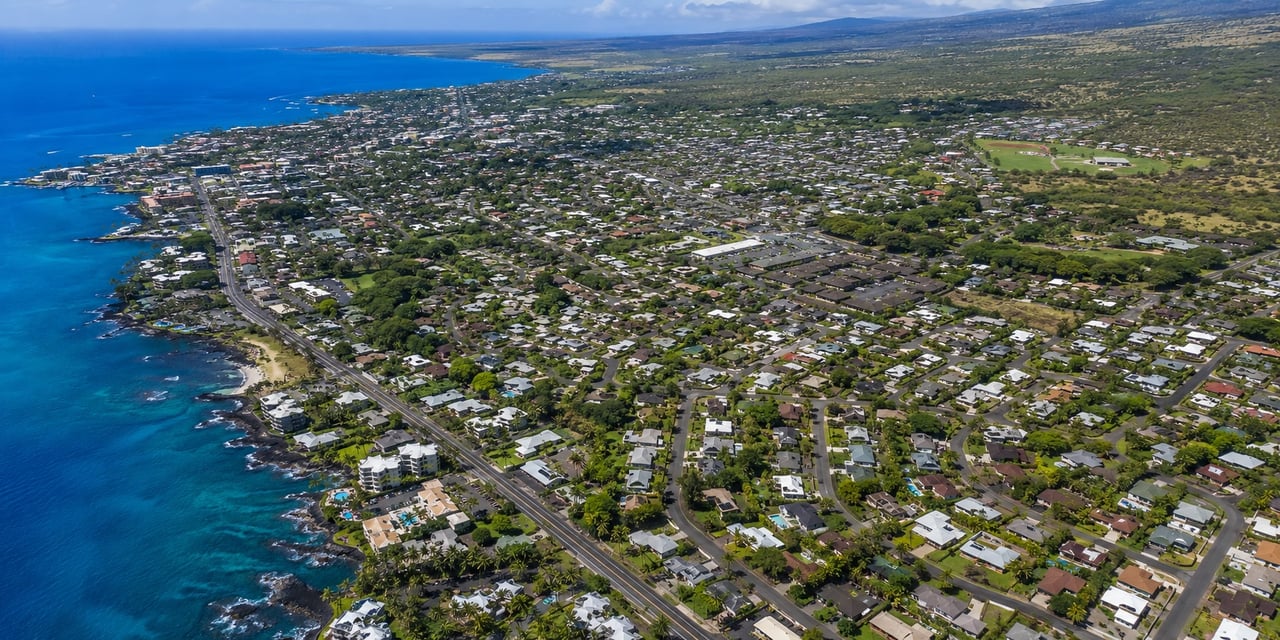
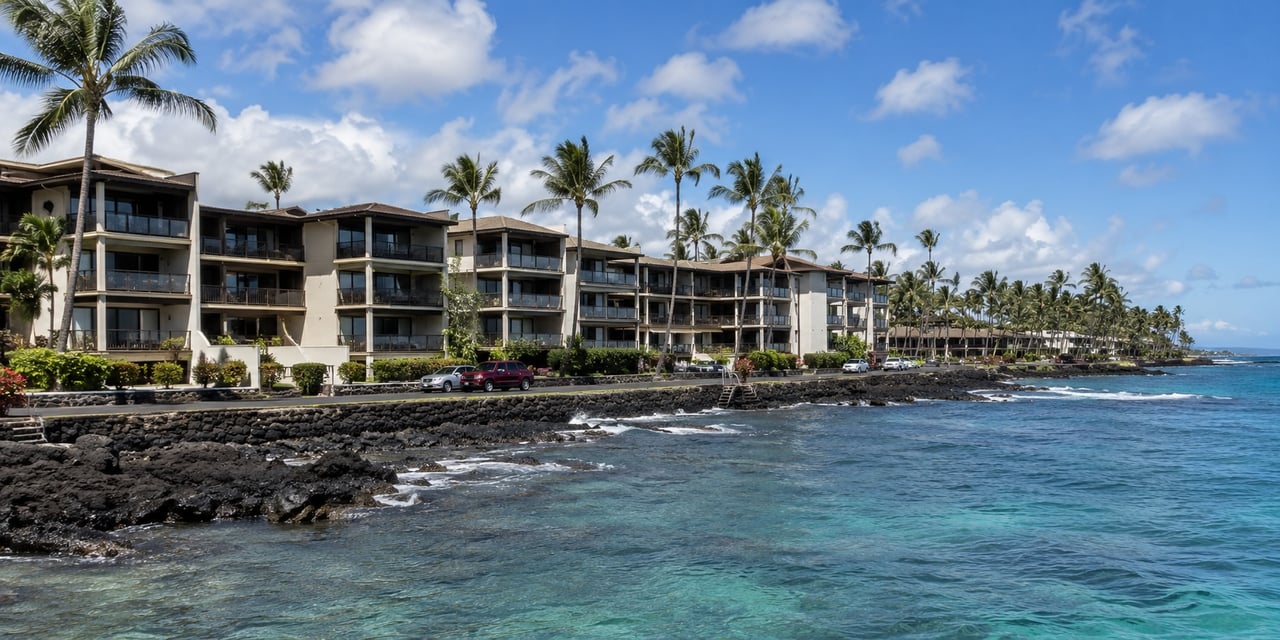
The leasehold inventory on the Kona coast is concentrated in older condominium complexes, primarily along Ali'i Drive, built in the 1970s and 1980s when leasehold development was more common.
Kona Makai, the oceanfront gated complex on Ali'i Drive, is entirely leasehold with a lease that expires in 2039 and renegotiation periods built in. Mauna Loa Village's lease runs to 2050. Hale Kona Kai and Kona Islander Inn near downtown are also leasehold. These are not bad properties. Some of them are well-maintained, well-located complexes. The leasehold structure is simply how they were developed, and it affects pricing, financing, and long-term planning in ways that need to be understood before you buy.
In some larger buildings, individual units can be either fee simple or leasehold within the same complex. The MLS uses FS for fee simple and LH for leasehold. Always verify. Never assume.
Frequently Asked Questions
Can I get conventional financing on a leasehold property in Kona?
Fannie Mae and Freddie Mac allow it, but the loan term must be at least five years shorter than the remaining lease term. Local Hawaii lenders are significantly more experienced with the structure than mainland lenders. If you are buying a leasehold property, start with a local lender. Do not wait until you are in escrow to discover your lender cannot make the loan work.
What is fee available and does it matter?
In some leasehold situations, the landowner offers to sell the underlying fee interest to leaseholders, converting the property from leasehold to fee simple. When a fee available option exists, lenders will sometimes finance the combined purchase as a standard fee simple transaction. The cost of buying the fee interest is set by the landowner based on current land values and can be substantial. Not every leasehold has this option. Verify current availability and cost in writing before factoring it into your analysis.
Is leasehold ever a good investment?
It can be, under specific conditions: sufficient remaining term, manageable rent structure, clear exit strategy, and realistic expectations about the terminal value. Vacation rental condos with strong income and leases running 30-plus years can pencil out. Agricultural parcels with development rights can work. The question is never whether leasehold is good or bad. The question is whether the specific economics of this lease, at this rent, with this remaining term, support the price being asked. Our Hawaii County property tax guide covers how leasehold units are assessed and what exemptions apply.
Do I need a Hawaii real estate attorney to buy a leasehold property?
I would strongly recommend it. I say that as someone who was a real estate attorney for 35 years and who now sells real estate. The lease document governs everything about what you are buying. Having qualified legal counsel review it before you are committed is not excessive caution. It is basic due diligence on a complex transaction. If you are also navigating CPR ownership in the same transaction, our CPR unit guide covers the overlap.
The Bottom Line
On the Big Island, leasehold is not a loophole or a bargain hiding in plain sight. It is a structured, time-limited interest that needs to be evaluated on its own terms.
If you understand how long you have, what you are paying over the full term, and what your exit looks like, it can be a rational decision. If you do not, the lower price can be genuinely misleading.
Brenda and I work with leasehold transactions regularly on the Kona and Kohala coast. The due diligence process for leasehold is different from fee simple, and having representation from someone who understands both the real estate and the legal structure makes a meaningful difference in what gets caught before closing. Feel free to reach out if you are evaluating a leasehold property and want to think through the specifics.
Mark Davis, Esq. is a licensed real estate broker (RB-23769) with Kona Homes for Sale at Coldwell Banker Island Properties, Kailua-Kona, Hawaii. He practiced as a transactional and litigation real estate attorney for 35 years before moving to the Big Island full time. He currently serves as a member of the Hawaii County Real Property Tax Board of Appeal. Brenda Kuessner holds the ABR, CRS, e-PRO, GRI, and GREEN designations and has sold real estate on the Big Island for 35 years. Together they serve buyers and sellers across the Kona and Kohala Coast market. This post is for general informational purposes only and does not constitute legal or tax advice.