I have been waking up in Kona for 35 years. The morning routine here is different from anywhere I have lived before. The light comes in early and clear, the air already warm but not yet hot, and if you are anywhere near the coast you hear the water. Most mornings I have coffee before I do anything else. Kona-grown, obviously. There is a reason this coffee travels the world.
I tell buyers who are relocating: come for a week before you decide. Not a vacation week. An ordinary week. Go to the farmers' market on a Saturday morning. Drive up to Holualoa on a Tuesday afternoon when the clouds are building on the slopes. Sit on a lanai at sunset along Ali'i Drive. Walk Kahalu'u Beach Park before the crowds arrive. That week will tell you more than any listing description.
Key Takeaways
- Kona wakes up early and outdoors. Most residents are at the beach, walking Ali'i Drive, or in the water before 9. The morning hours before the heat builds are genuinely special and are part of why people love living here.
- Daily errands in Kailua-Kona are manageable. There is a Costco, Target, and multiple grocery options near the Kona Commons area off Queen Kaahumanu Highway. You are not driving to Hilo for groceries.
- The neighborhood question shapes your daily life significantly. Keauhou residents walk to the water. Palisades residents drive to town but come home to cooler evenings and more space. Holualoa residents live in coffee country with a ten-minute drive to everything.
- Utilities and cost of living run higher than most mainland metros. Electricity, groceries, fuel, and construction materials all cost more because of shipping. Build a realistic budget before you fall in love with a specific property.
- Short-term rental rules in Kona are strict. If rental income is part of your plan, verify NUC status and zoning for any specific property before you write an offer.
Mornings: The Best Part of the Day
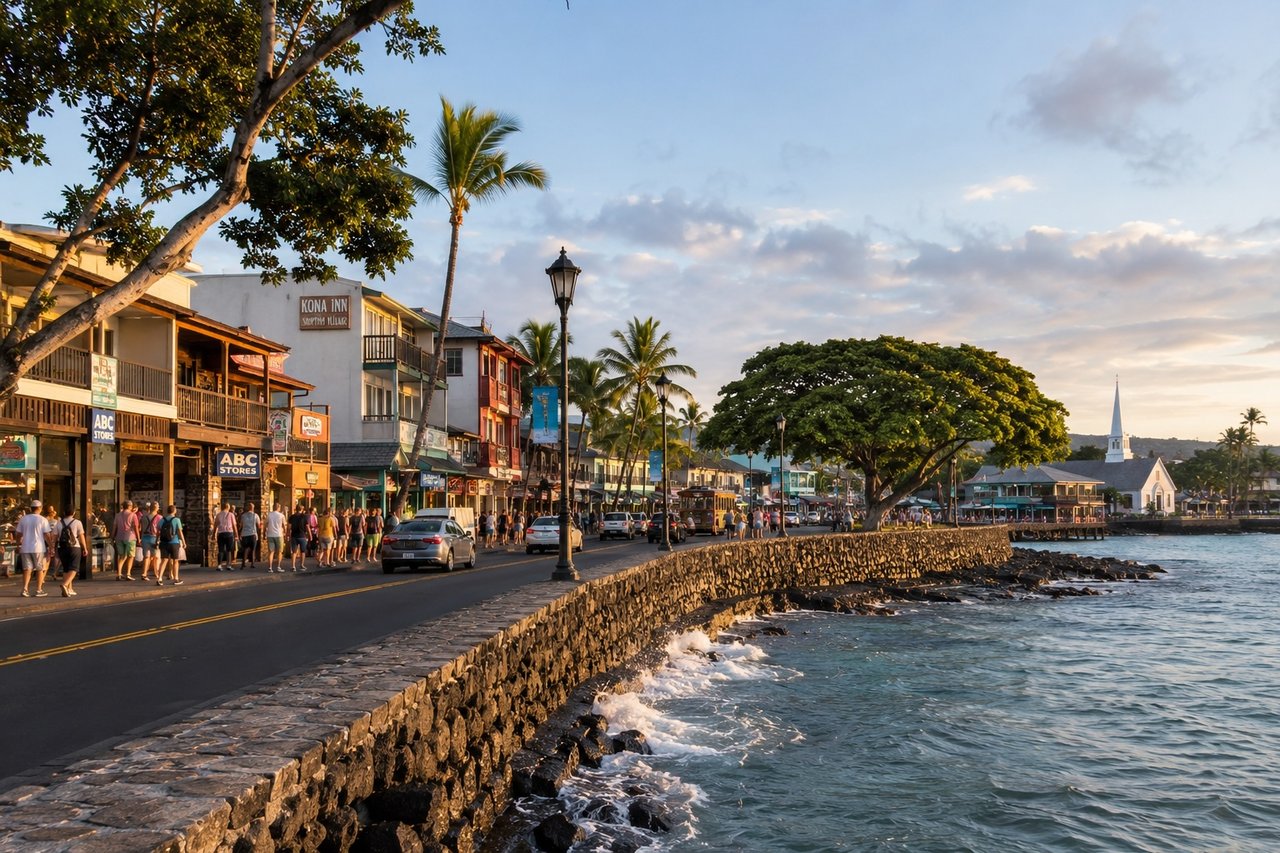
Kona mornings have a rhythm that becomes a ritual fast. The oceanfront corridor along Ali'i Drive is busy before 8: walkers, joggers, paddlers heading out from Keauhou Bay, people settling in at the outdoor tables at Lava Java or the Kona Inn Shopping Village with their coffee. The light at this hour on the water is something.
Kahalu'u Beach Park, just north of the Keauhou area, is one of the most accessible snorkel spots on the west coast, with calm, clear water, reliable turtle sightings, and a lava breakwater that keeps the bay sheltered most days. Local residents are in the water here before the tour groups arrive. If you buy in Keauhou, this becomes your Tuesday morning when the mood strikes.
Most of Kona's coastline is lava rock rather than sand, so the sandy beaches are limited and popular. Magic Sands at La'aloa Beach Park is close to town and gets waves when conditions allow for bodyboarding. White sandy beaches become precious up here in a way that surprises people coming from coastlines with more of them. Learning which conditions are good at which spots becomes second nature quickly.
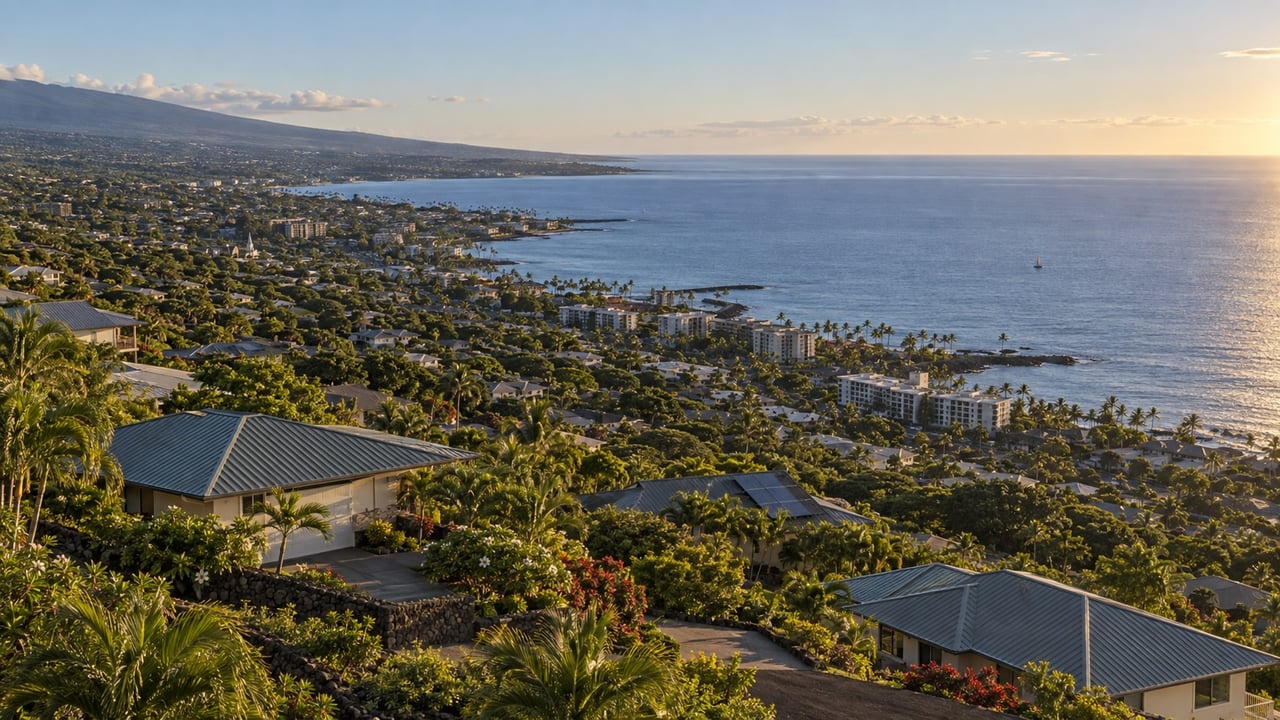
Microclimates shape your mornings more than you expect. The oceanfront is sunny and warm with a marine breeze. The Palisades at 1,000 feet is noticeably cooler and quieter. Holualoa at 1,400 feet often has clouds building on the slopes by mid-morning. If you live mauka, your morning might include coffee in the mist before you drive down to the coast for the afternoon. Many people would not trade that for anything.
Midday: Errands and the Everyday
Kailua-Kona town is not a big city, but it has what you need for daily life. Costco, Target, Safeway, KTA Super Stores, and a growing collection of specialty shops and restaurants are concentrated around the Kona Commons area off Queen Kaahumanu Highway and along Palani Road. Farmers' markets run at multiple locations during the week for fresh produce, fish, and local goods. The Saturday morning market at the Ali'i Drive parking lot near Kahaluu is a social institution as much as a shopping stop.
Driving is the norm. If you live close to historic Ali'i Drive or the town core, walking for errands and dinner is realistic. For most Kona addresses outside the town center, you are in the car for most things. Parking near the waterfront gets tight during peak tourist season and events. The Ironman World Championship in particular, which returns to Kona each year, affects the whole town for a week. Most locals build their schedules around it.
Medical care: Kona Community Hospital in Kealakekua is the primary acute-care facility for West Hawaii. It covers emergency care and many specialty services. For some specialized or tertiary care, residents travel to Queen's Medical Center on Oahu or to Hilo. The new Kaiser facility near Kealakehe Parkway has expanded access to primary and specialty care significantly. For day-to-day health needs, Kona is well-served. For complex medical situations, Oahu remains a factor in planning.
Afternoons and the Water
By early afternoon the heat builds along the coast and many people head upslope or shift to the water. This is when Kona's boating culture is most visible: deep-sea fishing charters heading offshore, whale-watching tours in season, and the afternoon kayak trips along the coastline. The Kona coast has some of the best blue water fishing in the world, and the fishing community here is serious about it.
South of town, Kealakekua Bay offers the clearest snorkeling water on the west coast if you can get a spot on a boat or kayak tour. Puuhonua o Honaunau National Historical Park is one of the most significant cultural sites in Hawaii and worth knowing as a resident, not just as a tourist destination. The coastline south of town has a different character from the resort-adjacent north. Quieter, more rural, harder to get to, and worth it.
For buyers considering upland neighborhoods like the Palisades or Holualoa, afternoons often mean the gardens, the orchards, the lanai with the ocean visible below through the coffee trees. The Kona Palisades has its own pace that is quieter than the coastal corridor in a way that appeals deeply to people who wanted that specifically. Our post on Kona Palisades vs. Keauhou walks through how the two areas actually compare for daily life.
Evenings: Sunsets Are Non-Negotiable
Sunset along Ali'i Drive is a daily ritual. I have watched it hundreds of times and it has not gotten ordinary. Locals stop. Visitors stop. Everyone stops for a few minutes at the end of the day facing west over the Pacific. There is usually someone playing music somewhere on the waterfront. Dinner follows, at one of the restaurants along Ali'i Drive or the Kona Inn Shopping Village, or a plate lunch from one of the spots near town. Nightlife is relaxed: live music at a handful of venues, casual bars, nothing that resembles a major city scene. The island goes to sleep reasonably early because the mornings start early.
What Things Actually Cost
I want to give you an honest picture because sticker shock after you own a property is not pleasant. Groceries, utilities, fuel, and building materials all run higher than most mainland metros because everything ships here. Electricity in Hawaii is consistently among the highest rates in the country. Many Kona homeowners invest in solar to manage long-term electricity costs, and it is worth factoring into your property evaluation, both as a cost savings and as a value consideration at resale.
Property taxes in Hawaii are generally lower than mainland rates on a percentage basis. What surprises buyers is insurance. Coastal properties can carry higher premiums for wind, flood, and lava coverage. HOA fees in Keauhou condo developments can run several hundred to over a thousand dollars monthly. These all belong in your total monthly carrying cost calculation from the start, not as a surprise after you close. Get insurance quotes for any specific property before you finalize your offer price.
Owning Here: The Rules Worth Knowing
Short-term rental rules in Kona are strict and trip up a lot of buyers who did not research them before making an offer. Hawaii County requires a Non-Conforming Use Certificate for vacation rentals in most residential zones, and new NUCs are no longer being issued in most areas. If rental income is part of your plan for a property, verify the NUC status and whether it transfers before you commit. HOA rules in condo buildings add another layer. Some buildings prohibit short-term rentals entirely regardless of county permits. Our post on Kona real estate questions answered covers STVR rules in detail.
Water and wastewater vary by neighborhood. Most of the coastal corridor and established developments are on county water and sewer. Upland areas and rural properties may use catchment water and septic. For remote closings, which are routine and work well here, our post on how remote closings work for Kona buyers covers everything you need to know about closing from the mainland.
Frequently Asked Questions
What is the weather like in Kailua-Kona year-round?
Warm and sunny most of the year on the coast, with highs typically in the upper 70s to mid-80s Fahrenheit. Kona is on the leeward side of the island, which means it is drier and sunnier than the windward east coast. Upland neighborhoods like Holualoa and the Palisades run five to eight degrees cooler with more afternoon cloud cover. There is no cold winter. There are occasional Kona storms in winter that bring heavy rain. Vog from Kilauea activity on the east side can affect air quality periodically depending on wind direction.
Are sandy beaches common in Kailua-Kona?
No. Much of the Kona coastline is lava rock, so sandy beaches are limited and tend to be popular. Magic Sands at La'aloa Beach Park, Kahalu'u Beach Park in Keauhou, and a handful of others are the go-to spots for most residents. White Sands can disappear temporarily during heavy surf when sand is pushed offshore. For longer sandy stretches, the Kohala Coast to the north has the resort beaches most people picture when they think of Hawaii.
How far is Kailua-Kona from the airport?
Kona International Airport is about 7 to 10 miles from downtown Kailua-Kona. From most Kona addresses, the drive is 20 to 45 minutes depending on your specific neighborhood and traffic. From Keauhou it is closer to 25 to 30 minutes. From upland areas like Holualoa, plan 30 to 40 minutes. The airport has direct mainland connections and serves inter-island flights.
Can I run a short-term vacation rental with a Kona property?
Maybe, but verify before you buy. Hawaii County requires a Non-Conforming Use Certificate for short-term rentals in most residential zones, and new NUCs are no longer being issued in most areas. You need a property that already has a valid, transferable NUC, or one in a zone where short-term rentals are permitted by right. HOA rules in condo buildings can prohibit rentals regardless of county permits. Verify the specific property's status before making rental income a part of your purchase rationale.
What is the cost of living in Kailua-Kona compared to the mainland?
Higher across most categories. Groceries, utilities, fuel, and building materials all cost more because of shipping. Electricity rates in Hawaii are among the highest in the country. Housing costs on the Kona coast run above national medians. Property taxes are generally lower than most mainland states on a percentage basis, which partially offsets other costs. Getting realistic monthly carrying cost estimates including insurance, HOA fees where applicable, and utilities before you make an offer is important.
What neighborhood in Kona is best for daily outdoor access?
Keauhou leads the market for daily beach and water access. Kahalu'u Beach Park is walkable from most Keauhou addresses, the bay has kayak and paddle access, and Ali'i Drive runs along the coast the full length of the neighborhood. For buyers who want cooler temperatures and more space but do not need daily beach access, the Kona Palisades or Holualoa offer a different kind of outdoor life. The right answer depends entirely on how you plan to spend your time.
If you are trying to figure out whether Kona fits the way you want to live, that is the best conversation to have before you start looking at listings. Reach out to us at Kona Homes for Sale or call 808-937-0430.
Brenda Kuessner holds the ABR, CRS, e-PRO, GRI, and GREEN designations and has sold real estate on the Big Island for 35 years. Mark Davis, Esq. is a licensed real estate broker (RB-23769) with Kona Homes for Sale at Coldwell Banker Island Properties, Kailua-Kona, Hawaii. He practiced as a transactional and litigation real estate attorney for 35 years before moving to the Big Island full time. He currently serves as a member of the Hawaii County Real Property Tax Board of Appeal. Together they serve buyers and sellers across the Kona and Kohala Coast market. This post is for general informational purposes only and does not constitute legal or tax advice.