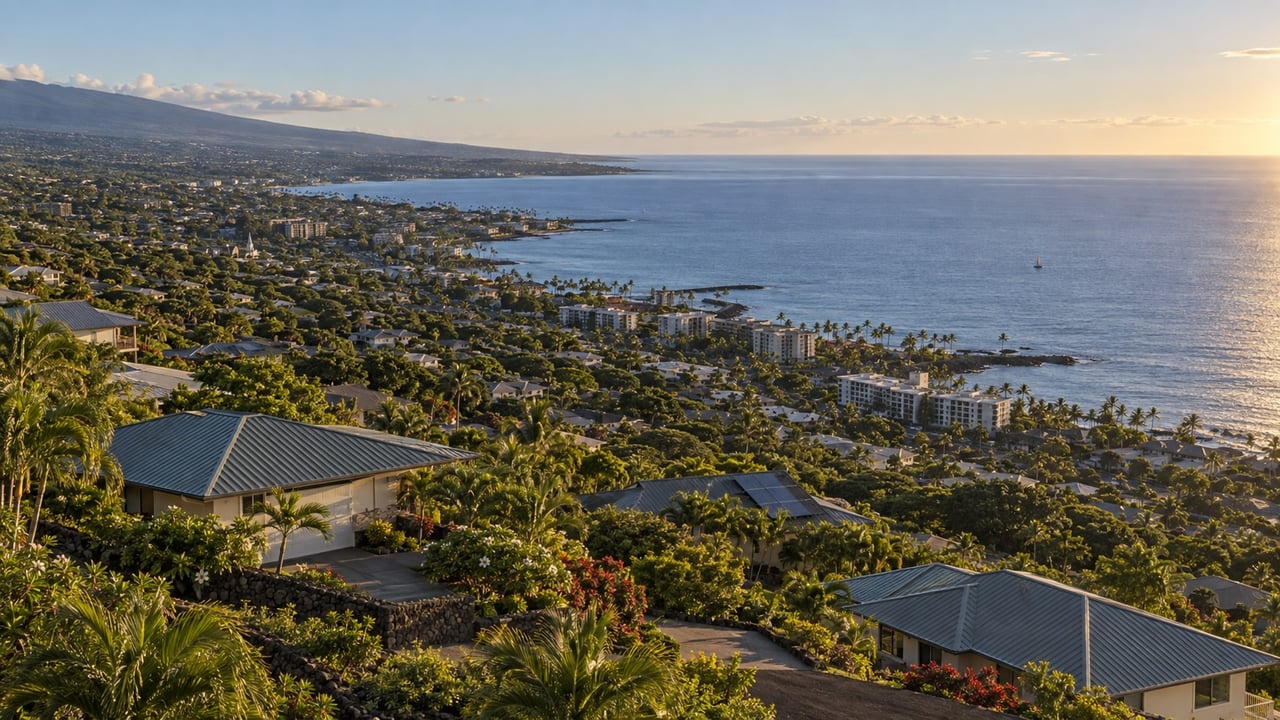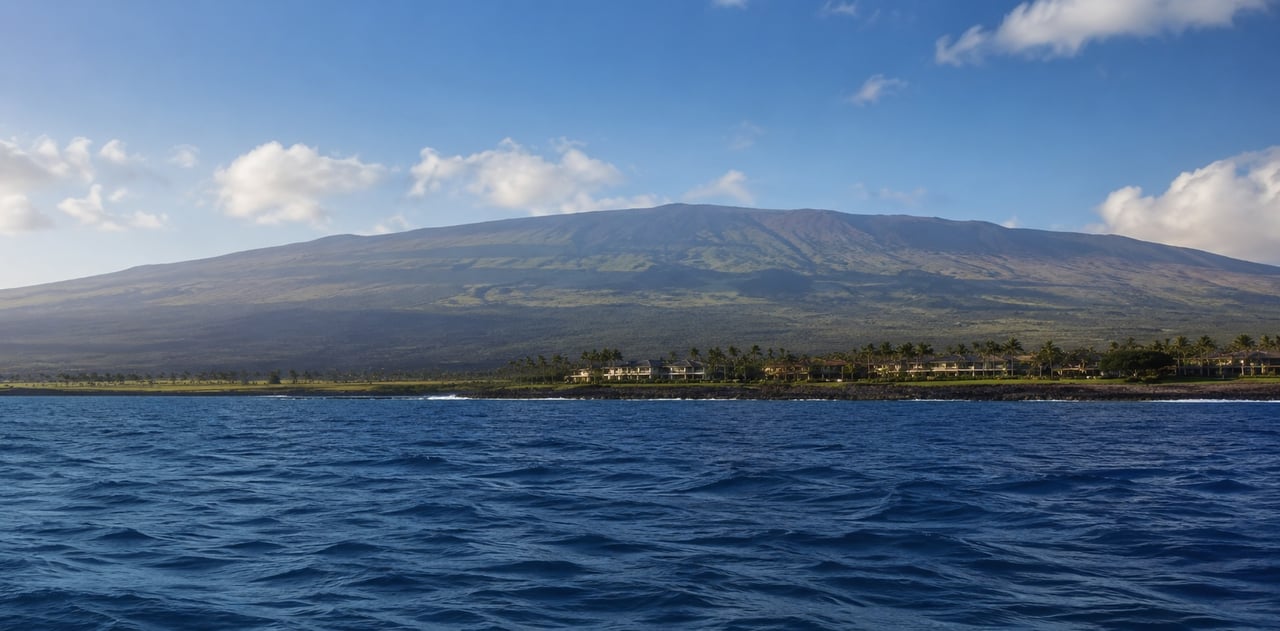
There is a moment on the drive up Kaiminani Drive when the air changes. You have just left Kailua-Kona, warm, bright, the ocean behind you, and you are climbing through the residential neighborhoods of the Palisades, and somewhere around 800 feet the temperature drops a noticeable notch. By 1,200 feet it is genuinely cooler. By the time you reach Kona Highlands or the upper Palisades, you are in a different world than the one you left fifteen minutes ago.
I have made that drive more times than I could count over 35 years. I have watched mainland buyers experience that temperature shift for the first time and see their faces change. Some of them have been looking at coastal condos for two days and suddenly they are asking me entirely different questions. Others feel the cool air and realize it is not what they came for. Both reactions are valid. The elevation question is one of the most personal decisions in the Kona market, and no amount of reading fully prepares you for it the way one afternoon drive does.
Key Takeaways
- The temperature difference between the coast and the Kona Palisades at 1,000 feet is roughly five to eight degrees Fahrenheit on most days. At 1,400 to 1,500 feet in Kona Highlands or upper Holualoa, it is more. The difference is most noticeable in the evenings and at night.
- Morning cloud cover in the Palisades and upper Kona neighborhoods is less common than afternoon cloud cover. Mornings are often clear with strong ocean views. Afternoons bring clouds that build on the slope, moderating the heat and giving the area its lush green character.
- Rainfall increases with elevation. The coast is relatively dry. Mid-Palisades gets more afternoon showers. Upper elevation neighborhoods get noticeably more rain, which is why the vegetation up there is so lush.
- Vog, volcanic haze from Kilauea activity, affects the Kona coast periodically. Upper elevation properties are not immune, but the experience varies by wind direction and the specific episode.
- Buyers who move to upland Kona and love it typically say the same thing: the nights are the reason. Sleeping without air conditioning in July at 1,200 feet is a genuinely different experience from the coast.
What the Temperature Actually Feels Like
The textbook answer is that temperature drops approximately 3.5 degrees Fahrenheit per 1,000 feet of elevation gain. At mid-Palisades elevations around 800 to 1,000 feet, that puts you roughly five to six degrees cooler than the coast on the same day. At Kona Highlands or upper Holualoa at 1,400 to 1,500 feet, closer to seven to eight degrees cooler. This sounds modest on paper. In practice, when the coast is at 88 degrees on a still August afternoon, 80 degrees with a breeze at 1,000 feet is meaningfully more comfortable.
The difference matters most at night. Coastal Kona on summer nights can stay warm enough that air conditioning feels necessary. The Palisades at 1,000 feet often allows open windows and a fan. Upper Palisades and Holualoa at 1,400 feet frequently cool down enough in the evenings that you reach for a light layer. Buyers who move up here and fall in love with it almost always mention the sleeping. They came for the ocean view and stayed for the July nights.
The difference is smaller in winter when the whole island cools down. It is largest in summer and during Kona weather events when the coastal areas get still, hot, and muggy and the elevation makes a significant difference. If you are visiting to decide, come in July or August. That is when the elevation contrast is most dramatic and most revealing about whether upland living is right for you.
Cloud Cover: Understanding the Rhythm
The cloud behavior in upland Kona has a daily rhythm that becomes completely predictable once you have lived it for a season. Mornings are typically clear. The ocean views from a Palisades lanai in the early morning are among the best views in the Kona market. The water is visible, the light is clean, and the air is cool and still. This is the part of the day that gets photographed..
By early to mid-afternoon, clouds build on the slope. They come up from behind the ridge and settle in around the upper neighborhoods. By 3 or 4 in the afternoon on most days, properties in the upper Palisades and Holualoa are often in the clouds or just below them. This is genuinely beautiful in its own way. The light shifts, the temperature drops another notch, and the vegetation comes alive in the moisture. Some buyers find it magical. Others find it claustrophobic after a few weeks.
The cloud cover affects solar panel output more at higher elevations, which is worth factoring in if you are evaluating a property with a photovoltaic system. Mid-morning production can be strong, but afternoon clouds reduce afternoon generation. On cloudy days in the upper Palisades, you are running on stored solar or grid power for a meaningful portion of the afternoon.
Ocean views from the upper Palisades are frequently best in the morning and after rain, when the air is clear and the water seems closer than it is. On cloud-heavy afternoons, the view is reduced or gone entirely until the clouds lift. This is not a dealbreaker for most buyers who choose elevation, and they came knowing the trade, but it is worth understanding before you fall in love with a property based on a clear morning visit.
Rain: More Than You Expect
Buyers coming from dry mainland climates are often surprised by how much more rain falls in the upper Palisades compared to the coast. The Kona coastline is genuinely dry. The mid-Palisades at 800 to 1,000 feet gets more afternoon showers, particularly during periods when the tradewinds are active and moisture moves up the slope. The upper Palisades and Holualoa can get substantial rainfall compared to the coast below.
This rain is a large part of why the vegetation up here is so lush and green. The coffee farms in Holualoa depend on it. The mature fruit trees on many Palisades properties thrive in it. The gardens that characterize upland Kona living would not be possible without it. If you love to garden, grow food, and have green space around you, the rainfall is a feature rather than a drawback.
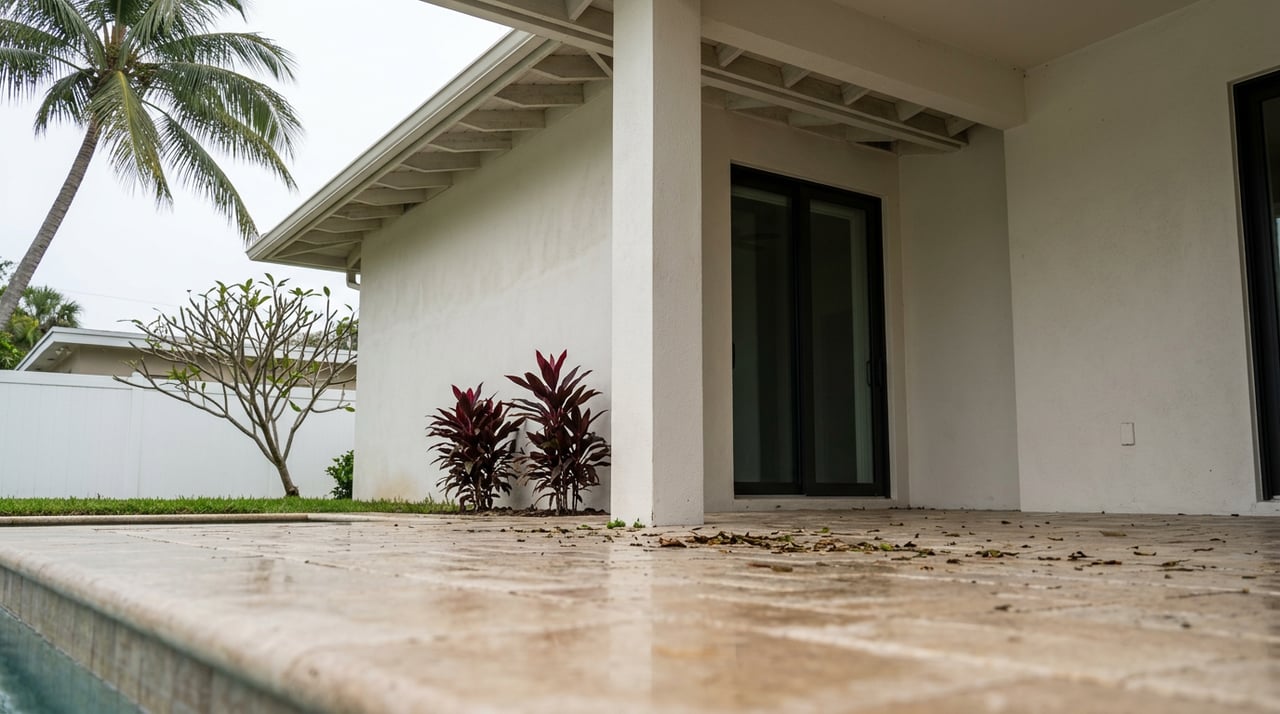
What it also means practically: exterior surfaces that face the prevailing weather need more maintenance attention than coastal properties face from salt spray. Roofing, gutters, and drainage all need appropriate attention in wetter upland zones. Vegetation management is ongoing. Things grow fast here, and invasive species need regular attention on larger lots. These are not dealbreakers, but they are real ownership costs that belong in your budget.
Vog: What It Is and What It Means
Vog is volcanic smog, a combination of sulfur dioxide and other gases emitted from Kilauea's ongoing volcanic activity on the east side of the island, mixed with moisture and oxygen. When wind conditions push it toward the Kona coast, leeward West Hawaii gets a milky haze that reduces visibility, mutes colors, and in significant episodes affects air quality for people with respiratory sensitivities.
Kona's vog situation has varied over the years depending on the level of volcanic activity. During periods of high activity, vog can be a significant daily presence on the coast. During quieter periods, it is occasional and mild. Upper elevation properties in the Palisades are not immune to vog. In fact, some people find it more concentrated in certain upland zones depending on wind patterns and terrain. Others find the trade winds at their specific elevation blow it through more quickly.
If you or someone in your household has asthma, chronic respiratory conditions, or known sensitivity to air quality, I would encourage you to visit during a period of known vog activity rather than only on clear days. The Hawaii Department of Health tracks vog conditions, and local conditions vary enough by specific location that visiting and asking neighbors is more informative than any general description I can give you.
What Long-Term Residents Say
I have sold properties up in the Palisades and Holualoa for decades, and I have watched the same pattern repeat itself with buyers who move up here and those who move back down. The ones who stay tend to share a few things in common. They prioritize comfort over convenience. They value the space and the quiet. They like to garden or grow things. They work from home or have flexible schedules that absorb the driving. They came specifically for the upland character rather than settling for it because they could not afford the coast.
The ones who sell and move back to the coast or to Keauhou typically tell me the same few things: the drive got old, they missed easy beach access, or the partner who was less enthusiastic about the altitude and clouds eventually won the argument. None of these are failures. They are honest reckonings with what the lifestyle actually requires. The elevation is genuine and so is the compromise.
What I tell every buyer who is seriously considering the Palisades or Holualoa: spend a week there if you can, not a day trip. Drive the road to town multiple times. Be there on a cloudy afternoon. Be there on a clear morning when the view is extraordinary. Eat dinner at home and feel what the evening is like. That week will tell you more than any description, including this one.
Frequently Asked Questions
How much cooler is it in the Kona Palisades than on the coast?
Roughly five to eight degrees Fahrenheit cooler at typical Palisades elevations of 800 to 1,200 feet. At upper Palisades and Holualoa elevations of 1,400 to 1,500 feet, the difference can be larger, particularly in the evenings. The difference is most noticeable in summer and during Kona weather events when the coast is warm and still. In winter when the whole island cools down, the elevation contrast is smaller.
Do you lose your ocean views when the clouds come in?
Yes, on many afternoons at upper elevations. The typical pattern is clear mornings with strong ocean views followed by clouds building on the slope through the afternoon. For properties in the upper Palisades and Holualoa, afternoon cloud cover is a regular part of daily life rather than an occasional event. Views are best in the morning and after rain. If your purchase decision is heavily based on the ocean view, visit the specific property at multiple times of day before you commit.
Does it actually rain significantly more at elevation in Kona?
Yes, meaningfully more than the coast. The Kona coastline is relatively dry for Hawaii. Rainfall increases as you move upslope, and the upper Palisades and Holualoa receive substantially more rain than the coast below. This is why the vegetation is so lush and why coffee farming is viable at these elevations. It also means more maintenance for exterior surfaces and more active vegetation management on larger lots.
Is vog worse at elevation or on the coast?
It varies by specific location, wind direction, and the particular vog event. There is no simple rule that elevation protects you from vog or makes it worse. Some upland areas experience it more intensely in certain wind conditions; others are less affected. If respiratory sensitivity to air quality is a concern, visit during a known vog period and ask neighbors about their experience specifically at that address. The Hawaii Department of Health tracks current vog conditions online.
What kind of buyer is happiest living at elevation in North Kona?
Buyers who prioritize comfort over convenience, value space and quiet over walkability, love to garden or grow things, have flexible schedules that absorb the drive to town, and came specifically for the upland character rather than settling for it. The buyers who struggle are the ones who underestimated the daily driving, missed easy beach access more than they expected, or found the afternoon clouds harder to live with than a single visit suggested.
How do I know if upland Kona living is right for me?
Spend time there, not just a quick visit. Drive the road to town at different times of day. Be there on a cloudy afternoon and a clear morning. Eat dinner at home and feel what the evening is like. Talk to people who live there. The elevation microclimate is real and specific, and the only way to know whether it suits you is to experience it rather than read about it. If you can stay for a week in one of the neighborhoods you are considering, that experience will be worth more than any description.
If you are weighing upland Kona against the coast and want to talk through what different neighborhoods and elevations actually look and feel like in person, that is exactly the conversation I have been having with buyers for 35 years. Reach out to us at Kona Homes for Sale or call 808-937-0430.
For the real estate picture behind the microclimate, our post on how elevation affects home prices in North Kona covers price bands, lava zones, and site costs by elevation.
Brenda Kuessner holds the ABR, CRS, e-PRO, GRI, and GREEN designations and has sold real estate on the Big Island for 35 years. Mark Davis, Esq. is a licensed real estate broker (RB-23769) with Kona Homes for Sale at Coldwell Banker Island Properties, Kailua-Kona, Hawaii. He practiced as a transactional and litigation real estate attorney for 35 years before moving to the Big Island full time. He currently serves as a member of the Hawaii County Real Property Tax Board of Appeal. Together they serve buyers and sellers across the Kona and Kohala Coast market. This post is for general informational purposes only and does not constitute legal or tax advice.