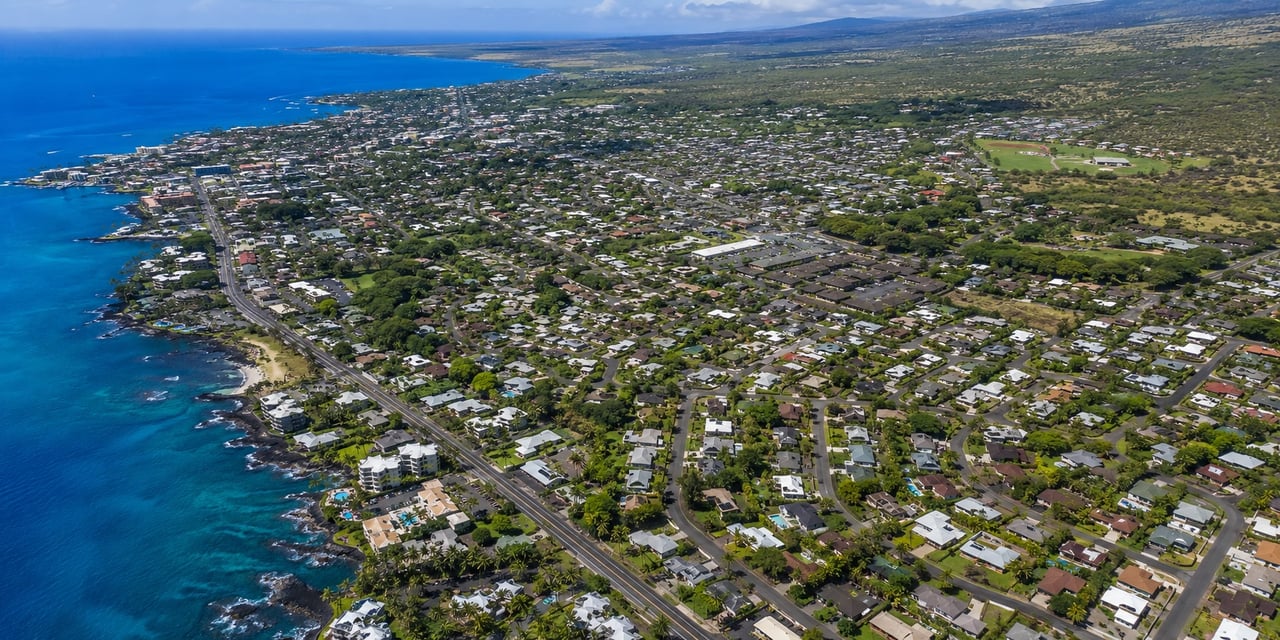
Kukio Golf and Beach Club occupies 675 acres on the Kona-Kohala coast, adjacent to the Four Seasons, with 143 home sites and 31 cottages. That low-density footprint tells you something important before you look at a single listing: this community is built around privacy, and the real estate process reflects that at every step.
Buyers looking at Kukio are not browsing a conventional market. The properties are large and highly custom. The sales process is appointment-driven and handled through a dedicated on-site brokerage. Club membership is central to how buyers evaluate what they are actually buying. And the due diligence picture, particularly for homesites and properties with development potential, involves layers that a standard residential transaction does not. Understanding all of that before you start the process makes a meaningful difference.
Key Takeaways
- Kukio is a private equity club community. Membership is exclusive to residents of Kukio, Maniniowali, and Kaupulehu. Eligibility must be confirmed for each specific property, not assumed.
- The sales process is appointment-driven and values discretion. Expect direct inquiry, detailed property documentation, and one-on-one communication rather than broad public listing activity.
- Homes are large, custom-designed residences, typically 3,900 to 6,600 square feet with estate-sized lots, outdoor living as a central design feature, and guest accommodations.
- Building or making major modifications in Kukio requires design review approval. Buyers interested in homesites or unfinished projects should verify what is permitted before they make plans.
- Parcel-level facts matter more here than anywhere else. What applies to one lot or residence in the community may not apply to the one next door.
What Makes Kukio Different
The club experience is inseparable from the real estate value at Kukio. The Beach Club, concierge arrival, dining pavilion, fitness facility, spa, pools, library, and games room are all part of what residents are buying into, alongside the 10-hole short course and the 18-hole Tom Fazio championship course. For most buyers at this price point, the home and the club lifestyle are evaluated together, not separately. A buyer who is primarily property-focused and indifferent to the club experience is not the typical Kukio buyer.
That shapes the marketing and the sales process. Kukio Properties serves as the exclusive on-site brokerage for the community and the surrounding neighborhoods of Maniniowali and Kaupulehu. The marketing approach centers on direct inquiry, detailed floor plans, video, and curated visual presentation rather than broad public listing syndication. If you have been to Kukio or know someone who has, that is often how serious buyer conversations start.
What Buyers Can Expect
The process at Kukio is more deliberate and more documentation-intensive than a typical luxury transaction, for good reasons. Properties here are highly individual. Lot sizes, sightlines, proximity to club amenities, design elements, and any build or approval history all vary by parcel. The expectation from the outset is that buyers will engage seriously with property-specific details rather than treating listings as interchangeable.
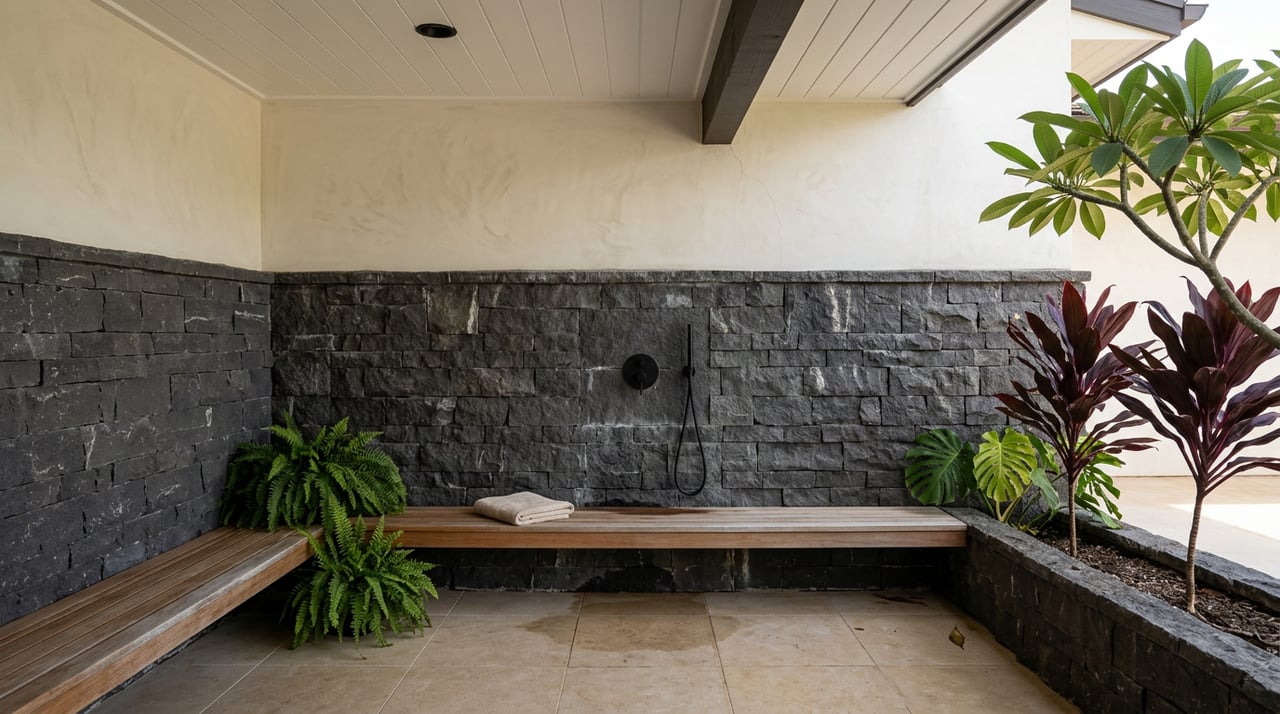
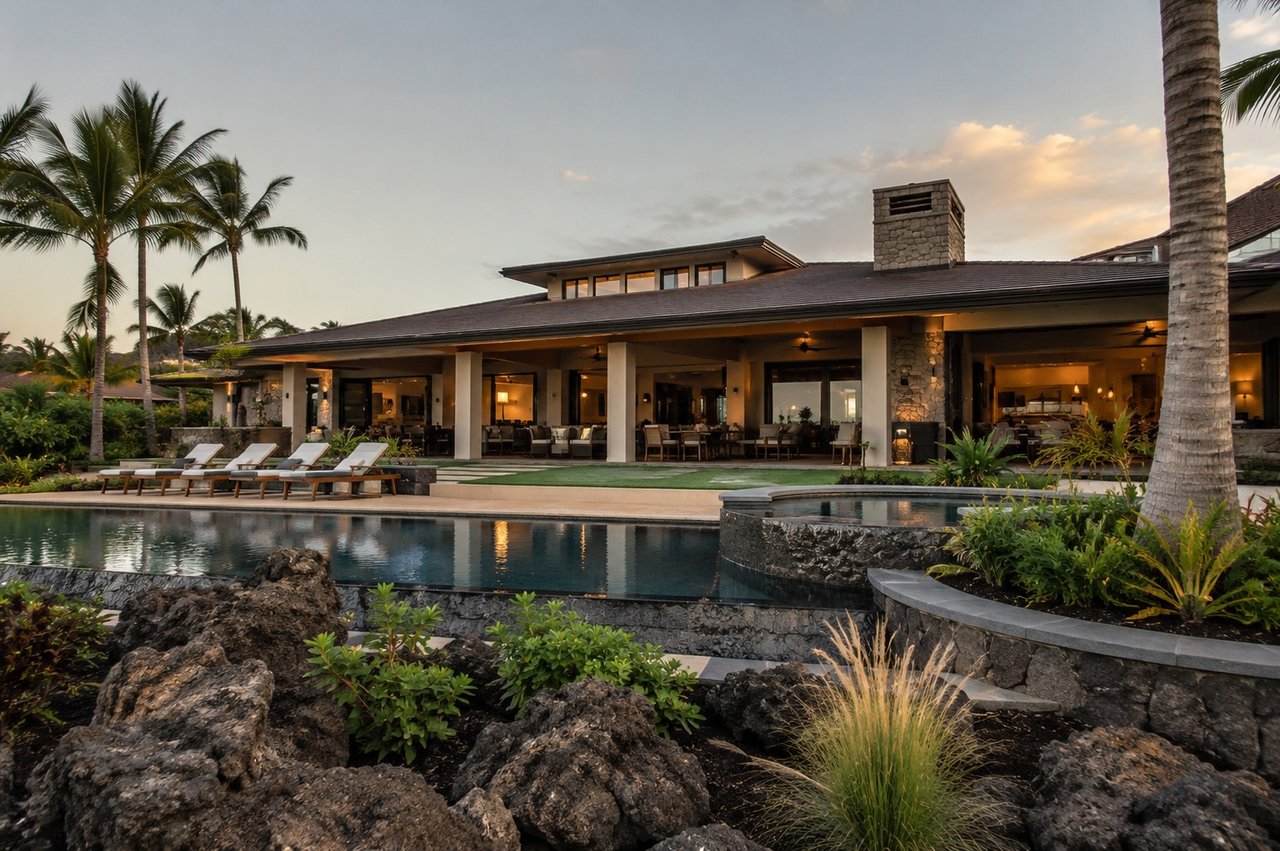
Current and recent sales examples give a sense of what the residential inventory looks like: homes running roughly 3,900 to 6,600 square feet, four to seven bedrooms, separate guest quarters or ohana spaces, large estate lots, and consistent emphasis on indoor-outdoor living. Open great rooms connecting to lanais, outdoor entertaining areas, infinity-edge pools, and estate-scale privacy are recurring themes. These are not production homes adapted for a luxury address. They are custom residences where the site, the design, and the club context are all part of the value calculation.
Membership eligibility is one of the first questions buyers ask, and it deserves a direct answer rather than an assumption. Membership at Kukio is exclusive to residents of the community and the affiliated neighborhoods. Some properties in the broader area reference an invitation to apply rather than automatic membership inclusion. Confirm the membership path for any specific property you are considering before you get attached to it. This is not a detail to sort out during escrow.
For buyers considering a homesite or a property with future building or renovation plans, design review is a meaningful part of the process. The community maintains architectural standards and visual consistency, and design concepts must go through review and approval before construction begins. That process affects timelines and what can realistically be built. Model it into your planning from the start rather than discovering the constraints after you own the parcel.
What Sellers Can Expect
Selling in Kukio rewards preparation and precision. Luxury buyers at this level are evaluating setting, privacy, design quality, outdoor living, flow, and how the specific home fits into the club lifestyle. They ask detailed questions. They want to understand guest accommodations, sightlines, parcel dimensions, entertainment spaces, and the property's relationship to club amenities. The better organized your documentation and the more clearly the property's specific attributes are presented, the smoother that conversation goes.
Presentation quality matters at a higher level here than in a conventional neighborhood sale. Strong photography and video that conveys the indoor-outdoor experience, the privacy, and the scale of the property do meaningful work. Generic listing copy that could apply to any luxury property does not. The marketing approach should be focused, polished, and tailored to the property. This market responds to precision, not volume.
One practical point for sellers of homesites or properties with development potential: describe what the property actually offers with accuracy, not optimism. If design review will be part of a buyer's plan, say so. Buyers who understand the full picture from the beginning close more reliably than buyers who discover constraints mid-process. Mark's background in real estate law, reviewing purchase contracts, title conditions, and recorded covenants on luxury properties, is directly applicable to transactions at this level, where the paperwork is more involved and the details matter more.
The Broader Kona-Kohala Luxury Context
Kukio sits within a broader luxury corridor that includes Hualalai Resort, Kohanaiki, and Mauna Lani to the north. Each community has its own character, membership structure, and price range, and buyers seriously considering this part of the coast typically compare several before committing. Kukio's specific combination of low density, Tom Fazio golf, and beach club access occupies a distinct position in that landscape.
The buyers active in this market are largely cash buyers, high-net-worth domestic and international purchasers who are rate-insensitive and focused on the quality of the asset and the lifestyle it supports. That buyer profile tends to produce more deliberate transactions with longer evaluation periods and more detailed due diligence, which is part of why working with a team that understands both the luxury market and the legal and title considerations at this level matters more than it does in a standard residential transaction.
Frequently Asked Questions
Does buying a Kukio property include automatic club membership?
Not necessarily, and you should not assume it. Membership at Kukio Golf and Beach Club is exclusive to residents of Kukio and the affiliated neighborhoods of Maniniowali and Kaupulehu. Some properties reference an invitation to apply rather than automatic inclusion. Confirm the membership eligibility path for any specific property before you proceed, not during escrow.
What types of homes are typically available in Kukio?
Custom-designed residences ranging roughly 3,900 to 6,600 square feet, with four to seven bedrooms, estate-sized lots, and consistent emphasis on indoor-outdoor living. Guest suites or ohana spaces are common. Homesites for custom builds are also available. The inventory is low-density by design, and no two properties are identical.
What is involved in building or renovating a Kukio property?
Design concepts must go through design review approval before construction begins. The community maintains architectural standards and visual consistency, and the review process affects both timelines and what can be built. Buyers considering homesites or properties with significant renovation or addition plans should verify what is permitted and factor the review process into their planning before they close.
How is the Kukio sales process different from a standard luxury transaction?
More private, more documentation-intensive, and more parcel-specific. Kukio Properties handles sales exclusively for the community through a direct inquiry and appointment-driven process rather than broad public listing activity. Properties are highly individual, so the due diligence involves reviewing parcel-specific details, membership eligibility, design review considerations, and any recorded conditions or covenants that apply to the specific property.
How does Kukio compare to other Kohala Coast luxury communities?
Kukio's specific combination of low density, Tom Fazio golf, beach club access, and adjacency to the Four Seasons places it at the top of the Kona-Kohala luxury tier alongside Hualalai Resort and Kohanaiki. Each community has a distinct character, membership structure, and price profile. Buyers seriously considering this corridor typically evaluate several before choosing, and the differences in lifestyle, amenities, and ownership structure are meaningful enough to warrant the comparison.
What should I review before making an offer on a Kukio property?
The property report and all associated documentation, membership eligibility for the specific parcel, any recorded covenants or conditions, the design review process if you have build or renovation plans, title status, and the HOA and club fee structure. For any property with a complex ownership history or development component, a real estate attorney reviewing the documents before you sign is worth the cost.
If you are considering a property in Kukio or elsewhere on the Kona-Kohala luxury corridor and want guidance on the due diligence, transaction structure, and what to look for at this level of the market, reach out to us at Kona Homes for Sale or call 808-854-5432.
For related reading: our post on the Kona luxury home market in 2025 covers how the broader luxury tier was performing, and our guide to remote closings covers how mainland buyers navigate the transaction process from a distance.
Mark Davis, Esq. is a licensed real estate broker (RB-23769) with Kona Homes for Sale at Coldwell Banker Island Properties, Kailua-Kona, Hawaii. He practiced as a transactional and litigation real estate attorney for 35 years before moving to the Big Island full time. He currently serves as a member of the Hawaii County Real Property Tax Board of Appeal.
Brenda Kuessner holds the ABR, CRS, e-PRO, GRI, and GREEN designations and has sold real estate on the Big Island for 35 years. Together they serve buyers and sellers across the Kona and Kohala Coast market. This post is for general informational purposes only and does not constitute legal or tax advice.