After vacationing in Kona for many years, our 13th trip was a one-way ticket. Moving here was a dream come true, and we never regretted it. But I will tell you honestly: if I had known in advance what I know now, the process would have gone more smoothly. There are things about relocating to the Big Island that are genuinely different from any mainland move, and the buyers I work with who arrive prepared have a significantly better experience than the ones who discover the details mid-escrow.
I have been helping people make this move for 35 years. What follows is what I tell every client who calls me from Portland or Denver or San Diego and says: we are finally doing it.
Key Takeaways
- Relocating to Kona requires more lead time than a mainland move. Six months is not excessive. Pet paperwork alone requires a minimum of four to six months if you want your dogs or cats to be released at the airport rather than quarantined.
- The Kona market does not have a spring selling season. Serious buyers and sellers are active year-round. Timing your search around mainland seasonal patterns will not serve you here.
- Hawaii has real estate concepts that do not exist on the mainland: leasehold ownership, HARPTA withholding, lava hazard zones, and CPR units. Understanding these before you start looking at listings saves time and prevents expensive surprises.
- The neighborhood question matters more in Kona than buyers expect. The difference between Keauhou, the Palisades, Holualoa, and the Ali'i Drive corridor is not just price. It is climate, lifestyle, and what your daily life actually looks like.
- Do a serious scouting trip before you make an offer. Two days is not enough. Give yourself five to seven days, drive neighborhoods at different times of day, and feel the elevation differences firsthand.
The Things Mainland Buyers Consistently Get Wrong
Let me start here, because it saves the most pain. After 35 years, I can tell you the mistakes that show up over and over again.
The first is underestimating lead time. People call me in January wanting to be here by March. That is not impossible, but it is tight, and if they have pets, it is essentially impossible without quarantine. The state's Direct Airport Release program for dogs and cats requires a precise sequence: microchipping, rabies vaccination, a FAVN blood titer test at an approved laboratory, and a waiting period after the titer test comes back clean. Start this process four to six months before you plan to arrive. I have seen families separated from their dogs for months because they did not know this.
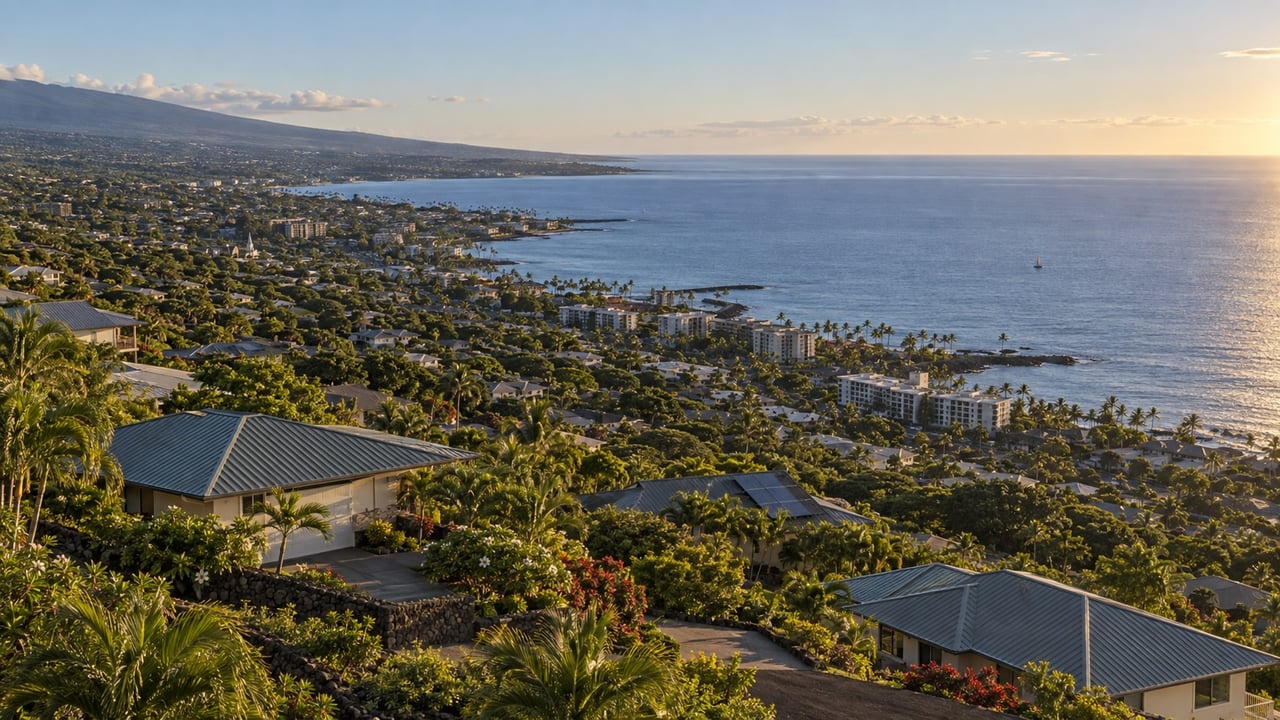
The second is treating the neighborhood question as a detail rather than a decision. Buyers sometimes tell me they want to be "near Kona" as if Kona is one place. It is not. Keauhou is warm, coastal, and resort-adjacent. The Kona Palisades is five to eight degrees cooler, quieter, and suburban. Holualoa is coffee country at 1,400 feet with an entirely different character. These are not variations on the same thing. They are genuinely different living environments, and choosing the wrong one for how you actually want to live is an expensive mistake.
The third is not coming to visit first. I have had buyers make offers based on video tours alone. It can work. But Kona is one of those places where being here in person reveals things no video captures: the temperature shift as you drive upslope, what the tradewinds feel like at 3 in the afternoon, how loud the road traffic is from a specific lanai. If you can fly over for a week before you commit, do it.
Your Timeline: Six Months Is Not Too Early to Start
Relocating to Kailua-Kona well requires a longer runway than most mainland moves. Here is how the timeline typically plays out for buyers who do it smoothly.
Six months out: start your neighborhood research in earnest. Get pre-qualified with a lender who has actually closed Hawaii transactions. The underwriting for leasehold properties, condos in certain lava zones, and vacation rental properties can differ significantly from mainland norms. If you have pets, start the quarantine program paperwork immediately. Begin researching vehicle shipping carriers and household freight timelines.
Three to four months out: plan a scouting trip of five to seven days. Spend time in each neighborhood on your shortlist. Drive the access roads. Sit on the lanais. Talk to people at the farmers' market. Go to Holualoa on a First Friday evening. Have your agent walk you through active listings so you have a real feel for what your budget buys in each area. Come home with a ranked list, not just more questions.
One to two months out: get serious about a specific search area. Review properties with your agent, get pre-approved rather than just pre-qualified if you have not already, and start the conversation with an escrow officer so you understand the Hawaii closing process before you are in the middle of it. Finalize your shipping and freight logistics.
Offer to close: most financed purchases in Hawaii close in 30 to 45 days after an accepted offer. Cash transactions can be faster. Hawaii closings are handled by escrow companies and the transaction is not legally closed until the deed records with the State Bureau of Conveyances in Honolulu, not at the county level as on the mainland. Plan your arrival and key handoff around the recording date, not the signing date. Our post on how remote closings work for Kona buyers covers this in detail.
Hawaii Concepts That Will Come Up in Your Transaction
Hawaii real estate has several concepts that simply do not exist on the mainland. Encountering them for the first time mid-escrow is stressful. Here is what you need to know before you start.
Leasehold versus fee simple: in fee simple ownership, you own the land and everything on it. In a leasehold, you own the structure but lease the land from a separate landowner under a recorded ground lease. Leasehold properties are more common in Kona than buyers expect, particularly in older Ali'i Drive condo developments. They affect financing, carrying costs through ground rent, and resale. If you are considering a leasehold property, understand the lease terms before you fall in love with the view. Our full post on leasehold vs. fee simple in Kona covers everything you need to know.
HARPTA: if you ever sell your Kona property and you are not a Hawaii resident at the time of sale, the buyer's escrow company will be required to withhold a percentage of the gross sales price and remit it to the state. This does not affect you as a buyer, but it is a significant factor in how your transaction will close if you are buying from a mainland seller. It also shapes what you need to plan for if you ever sell. Our post on HARPTA and FIRPTA explains it fully.
Lava hazard zones: the USGS maps Hawaii Island into lava flow hazard zones numbered 1 through 9. Most of Kailua-Kona and the Kona Palisades sits in Zone 4, which covers the flanks of Hualalai. Zone 4 affects insurance availability and lender underwriting. It is not a reason to avoid the area. I have lived here for 35 years. But it is a real factor in your due diligence. Confirm any specific parcel's zone before you write an offer.
CPR units: a Condominium Property Regime is a legal mechanism that allows a property to be divided into separately titled units. CPR units are common in Kona, particularly on agricultural and rural parcels. They can offer a good entry price into a neighborhood but come with a declaration you need to read carefully. For more on all of these, see our post on the most googled Kona real estate questions.
Choosing Your Neighborhood: The Most Important Decision
I tell every relocating buyer the same thing: spend more time on the neighborhood question than you think you need to. The price per square foot will vary. The lifestyle will vary more.
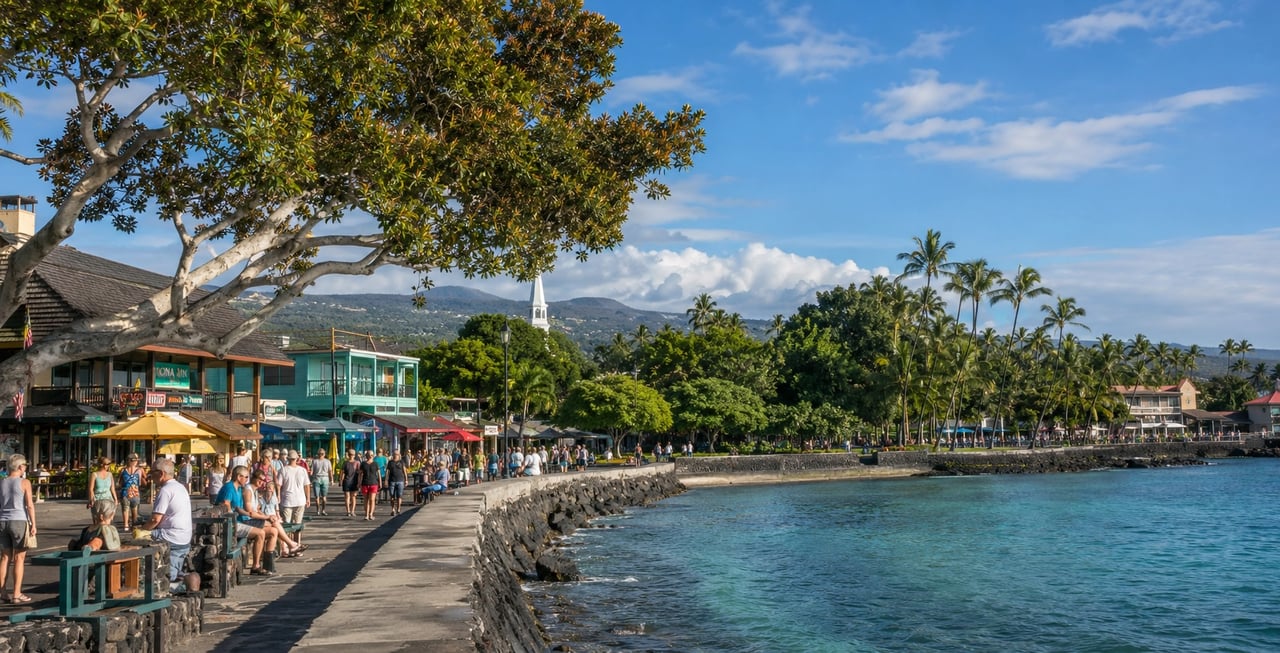
Historic Kailua Village and Ali'i Drive is the most walkable part of Kona. Condos, restaurants, the waterfront, the Ironman finish line. If you want to walk to dinner and be at the ocean in minutes, this is your area. Parking and HOA rules are part of the picture.
Keauhou is four miles south along Ali'i Drive with a resort character, Keauhou Bay, good snorkeling access, golf, and a small shopping center that handles most daily errands. The buyers who love it most are the ones who want daily beach and water access as part of their routine. Our post on outdoor life in Keauhou covers what daily life looks like there.
The Kona Palisades is the upland North Kona area above the airport, running from about 500 to 1,800 feet elevation. Noticeably cooler than the coast, more space, suburban character, single-family homes. Good for buyers who want a larger lot and quieter surroundings without being far from town services. Utilities vary more up here. Some properties use catchment water and septic rather than county systems.
Holualoa is coffee country, art galleries, and a village feel at about 1,400 feet. The buyers who choose it have usually been visiting the island for years and know exactly what they want. It is not for everyone. If you have never spent an evening in Holualoa, make that one of your stops on your scouting trip. Our post on what makes Holualoa special gives you the full picture.
Captain Cook and South Kona offer rural coffee-belt living, access to Kealakekua Bay, and a longer drive to town. For buyers who have been romanticizing this kind of life, I always say: visit first, ideally stay a few nights, and make sure the reality matches the image. It is beautiful. The drive is also real.
What Things Actually Cost on the Big Island
I want to give you an honest picture because the sticker shock surprises people who did not plan for it.
Groceries, utilities, fuel, and building materials all run higher than most mainland metros because of shipping costs. Electricity in Hawaii is consistently among the highest in the country. If you plan to rely on air conditioning at lower elevations, build that into your monthly budget. Many Kona homeowners invest in solar specifically to manage electricity costs over time, and it is worth factoring into your property evaluation.
Property taxes in Hawaii are generally lower than mainland rates on a percentage basis, which surprises people. What can catch buyers off guard is insurance. Coastal properties can carry higher premiums for wind and flood coverage. Properties in lava zones have their own insurance considerations. Get insurance quotes for any specific property before you finalize your price range, not after.
HOA fees in Keauhou condo developments can run from several hundred to over a thousand dollars a month depending on the building. These fees cover expenses that a single-family homeowner pays separately, but they need to be in your monthly carrying cost calculation from the start. Ask for the current budget, the reserve study, and any pending special assessments before you remove contingencies on any condo purchase.
Moving Logistics: What You Need to Know
Pets, as I mentioned: start the Hawaii quarantine program paperwork four to six months before your planned arrival date. The state's Direct Airport Release program requires microchipping, rabies vaccination at a specific timing, a FAVN blood titer test at an approved laboratory, and a health certificate from a USDA-accredited veterinarian within ten days of travel. Miss any step or get the timing wrong and your pet goes into quarantine at the state facility, potentially for weeks. The Hawaii Department of Agriculture's Animal Industry Division website has the official requirements and is the only source worth relying on for this.
Vehicle shipping from West Coast ports typically runs $1,500 to $2,500 for a standard sedan, plus port fees and local registration and inspection once it arrives. Budget $2,000 or more all-in and book your carrier four to eight weeks ahead. Transit typically runs 7 to 14 days to a Hawaiian port plus port handling and island delivery time.
Household goods by ocean freight from West Coast ports typically take three to six weeks door-to-door. Consider sending an essentials box by air and following with your household goods by container. Shipping and replacement costs here are high, so it pays to pare down before you move rather than after.
Due Diligence: What to Check Before You Commit
Kona's tropical climate and coastal conditions call for a thorough inspection plan that differs from a mainland purchase.
Wood-destroying organisms: schedule a termite and WDO inspection separately from your general home inspection. It is essentially mandatory for any wood-frame structure in Hawaii and is a standard part of the due diligence process here.
Water and wastewater: for properties in the Palisades, Holualoa, or rural South Kona, confirm whether the property is on county water or catchment, and sewer or septic. Older parcels in some areas have cesspools rather than septic, which carries state upgrade requirements. This is not a dealbreaker but it belongs on your checklist early.
Utilities and broadband: cell coverage and internet speed vary significantly by address in upland areas. If you work remotely, test connectivity at the specific property address before you commit. A half-mile difference in terrain can change what service is available.
Surveys: Hawaii often uses a K-2 staking survey to confirm property corners. If the seller's survey is missing or outdated, order one early in escrow to avoid delays at closing.
Frequently Asked Questions
How far in advance should I start planning a move to Kona?
Six months is not too early, particularly if you have pets. The Hawaii animal quarantine program requirements for Direct Airport Release take a minimum of four to six months to complete depending on when your pet's titer test is processed. Vehicle shipping and household freight have their own lead times. For the property search itself, three to four months of active research plus a dedicated scouting trip gives most buyers a realistic runway to close and arrive on a schedule that works.
Is there a best time of year to buy in Kona?
No. The Kona market does not have a spring selling season the way mainland markets do. Hawaii does not have a winter that drives people indoors and creates pent-up demand for spring. Serious buyers and sellers are active year-round. What does matter is inventory levels in your specific price range and neighborhood, which your agent can pull from current MLS data. Timing your search around mainland seasonal patterns is a mistake in this market.
What is HARPTA and does it affect me as a buyer?
HARPTA is Hawaii's real property tax withholding requirement for non-resident sellers. When you buy from a seller who is not a Hawaii resident, the escrow company withholds a percentage of the gross sales price and remits it to the state. This is not an extra tax on you as the buyer, but it does affect the seller's net proceeds and can occasionally create complications if not handled in advance. It will also apply to you if you ever sell your Kona property while living on the mainland.
Can I bring my dogs and cats to Hawaii without quarantine?
Yes, through the state's Direct Airport Release program, if you meet all requirements precisely. The sequence involves microchipping, rabies vaccination at a specific timing, a FAVN blood titer test at an approved lab, and a health certificate from a USDA-accredited vet within ten days of travel. Start this process four to six months before your planned arrival. The Hawaii Department of Agriculture's Animal Industry Division website has the official requirements. If any step is missed or mistimed, your pet goes into quarantine, potentially for weeks.
What is the most common mistake mainland buyers make when relocating to Kona?
Not visiting in person before they buy. Video tours and photos can get you a long way, and remote closings are completely routine in this market. But Kona is one of those places where the physical experience of being here reveals things no screen captures: the temperature shift as you drive upslope, the feel of the tradewinds in the afternoon, what a specific neighborhood sounds and smells like at dusk. If you can spend five to seven days here before you commit, you will make a better decision.
How does the Kona real estate market compare to mainland markets?
It is smaller, more local, and has several Hawaii-specific concepts that do not exist on the mainland: leasehold ownership, HARPTA withholding, lava hazard zones, CPR units, and a utility landscape that varies significantly by neighborhood and elevation. The transaction process uses escrow companies rather than closing attorneys and closing is tied to recording with the State Bureau of Conveyances rather than a county-level filing. It is navigable, and buyers who come in prepared find it much less stressful than buyers who discover these things for the first time mid-escrow.
If you are thinking about making the move to Kona and want to talk through what the process looks like for your specific situation, that is the conversation I have been having for 35 years and I genuinely enjoy having it. Reach out to us at Kona Homes for Sale or call 808-937-0430.
Brenda Kuessner holds the ABR, CRS, e-PRO, GRI, and GREEN designations and has sold real estate on the Big Island for 35 years. Mark Davis, Esq. is a licensed real estate broker (RB-23769) with Kona Homes for Sale at Coldwell Banker Island Properties, Kailua-Kona, Hawaii. He practiced as a transactional and litigation real estate attorney for 35 years before moving to the Big Island full time. He currently serves as a member of the Hawaii County Real Property Tax Board of Appeal. Together they serve buyers and sellers across the Kona and Kohala Coast market. This post is for general informational purposes only and does not constitute legal or tax advice.